

Red-necked Grebe
Podiceps grisegena
Silhouette: Doug Backlund (photo), John E. McCormack, Michael G. Harvey, Brant C. Faircloth, Nicholas G. Crawford, Travis C. Glenn, Robb T. Brumfield & T. Michael Keesey · PhyloPic
- KingdomAnimalia (Animals)
- PhylumChordata (Chordates)
- ClassAves (Birds)
- OrderPodicipediformes (Grebes)
- FamilyPodicipedidae (Grebes)
- GenusPodiceps (Typical Grebes)
- SpeciesPodiceps grisegena (Red-necked Grebe)
About the Red-necked Grebe
The red-necked grebe (Podiceps grisegena) is an aquatic bird found in the temperate regions of the northern hemisphere. A migratory bird, its wintering habitat is largely restricted to calm waters just beyond the waves around ocean coasts, although some birds may winter on large lakes. Grebes prefer shallow bodies of fresh water such as lakes, marshes or fish-ponds as breeding sites.
The red-necked grebe is a fairly drab dusky-grey bird in winter. During the breeding season, it acquires the distinctive red neck plumage, black cap and contrasting pale grey face from which its name was derived. It also has an elaborate courtship display and a variety of loud mating calls. Once paired, it builds a nest from water plants on top of floating vegetation in a shallow lake or bog.
Like all grebes, the red-necked is a good swimmer and particularly swift diver, and responds to danger by diving rather than flying. The feet are positioned far back on the body, near the tail, which makes the bird ungainly on land. It dives for fish or picks insects off vegetation; it also swallows its own feathers, possibly to protect the digestive system. The conservation status of its two subspecies, P. g. grisegena, found in Europe and western Asia, and the larger P. g. holbolii (sometimes called Holbøll's grebe), found in North America and eastern Siberia, is evaluated as Least Concern, and the global population is stable or growing. Wikipedia →
Recent sightings of Red-necked Grebe in Shenandoah National Park
LIVEiNaturalistClosest Relatives at Shenandoah National Park


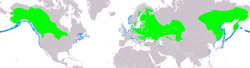
Global Distribution
Warmer areas are where this animal is recorded most often.
Parks Where Found
| # | Park | Country | Daily sighting probability |
|---|---|---|---|
| 1 | Wrangell-St. Elias National Park | 🇺🇸 United States | |
| 2 | Acadia National Park | 🇺🇸 United States | |
| 3 | Hortobágy National Park | 🇭🇺 Hungary | |
| 4 | Biebrza National Park | 🇵🇱 Poland | |
| 5 | Kenai Fjords National Park | 🇺🇸 United States | |
| 6 | Wadden Sea National Park | 🇩🇪 Germany | |
| 7 | Cape Breton Highlands National Park | 🇨🇦 Canada | |
| 8 | Point Pelee National Park | 🇨🇦 Canada | |
| 9 | Shenandoah National Park | 🇺🇸 United States | |
| 10 | Triglav National Park | 🇸🇮 Slovenia | |
| 11 | Katmai National Park | 🇺🇸 United States | |
| 12 | Wood Buffalo National Park | 🇨🇦 Canada | |
| 13 | Isle Royale National Park | 🇺🇸 United States | |
| 14 | Gauja National Park | 🇱🇻 Latvia | |
| 15 | Plitvice Lakes National Park | 🇭🇷 Croatia | |
| 16 | Bavarian Forest National Park | 🇩🇪 Germany | |
| 17 | Camargue | 🇫🇷 France | |
| 18 | Denali National Park | 🇺🇸 United States | |
| 19 | Snowdonia National Park | 🇬🇧 United Kingdom | |
| 20 | Fertő-Hanság National Park | 🇭🇺 Hungary |