


Common Dwarf Mongoose
Helogale parvula
Silhouette: Rebecca Groom · PhyloPic
- KingdomAnimalia (Animals)
- PhylumChordata (Chordates)
- ClassMammalia (Mammals)
- OrderCarnivora (Carnivorans)
- FamilyHerpestidae (Mongooses)
- GenusHelogale (Dwarf Mongooses)
- SpeciesHelogale parvula (Common Dwarf Mongoose)
About the Common Dwarf Mongoose
The common dwarf mongoose (Helogale parvula) is a mongoose species native to Angola, northern Botswana, northern Namibia, KwaZulu-Natal in South Africa, Zambia and East Africa. It is part of the genus Helogale, along with the Ethiopian dwarf mongoose.
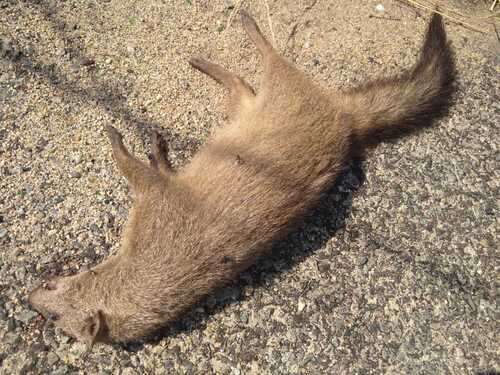
The common dwarf mongoose has soft fur ranging from yellowish red to very dark brown. It has a large pointed head, small ears, a long tail, short limbs and long claws. With a body length of 16–23 cm (6.3–9.1 in) and a weight of 213–341 g (7.5–12.0 oz), it is Africa's smallest member of the order Carnivora.
The common dwarf mongoose ranges from East to southern Central Africa, from Eritrea and Ethiopia to the provinces of Limpopo and Mpumalanga in the Republic of South Africa. It inhabits primarily dry grassland, open forests and bushland up to an elevation of 2,000 m (6,600 ft). It is especially common in areas with many termite mounds, its favorite sleeping place. It avoids dense forests and deserts.
Helogale parvula parvula Helogale parvula ivori Helogale parvula mimetra Helogale parvula nero Helogale parvula ruficeps Helogale parvula undulatus Helogale parvula varia... Wikipedia →
Recent sightings of Common Dwarf Mongoose in South Luangwa National Park
LIVEiNaturalistClosest Relatives at South Luangwa National Park

 Banded Mongoose
Mungos mungo

 Slender Mongoose
Galerella sanguinea

 White-tailed Mongoose
Ichneumia albicauda

 Bushy-tailed Mongoose
Bdeogale crassicauda

 Marsh Mongoose
Atilax paludinosus
 Meller's Mongoose
Rhynchogale melleri

 Leopard
Panthera pardus

 Lion
Panthera leo

 Spotted Hyena
Crocuta crocuta

 Painted Hunting Dog
Lycaon pictus

 African Civet
Civettictis civetta

 Honey Badger
Mellivora capensis
Global Distribution
Warmer areas are where this animal is recorded most often.