


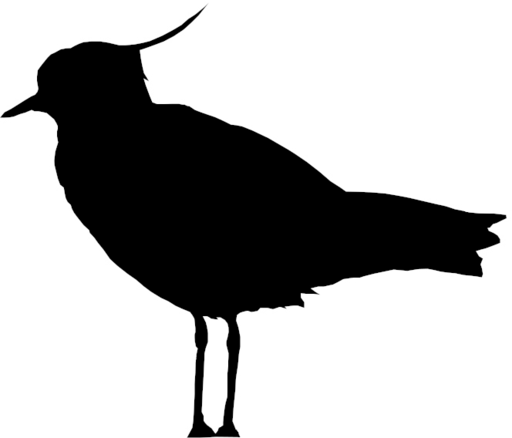
Northern Lapwing
Vanellus vanellus
Silhouette: Nina Skinner · PhyloPic
- KingdomAnimalia (Animals)
- PhylumChordata (Chordates)
- ClassAves (Birds)
- OrderCharadriiformes (Shorebirds and Allies)
- FamilyCharadriidae (Plovers and Lapwings)
- GenusVanellus (Lapwings)
- SpeciesVanellus vanellus (Northern Lapwing)
About the Northern Lapwing
The northern lapwing (Vanellus vanellus), also known as the peewit or pewit, tuit or tewit, green plover, or (in Ireland and Great Britain) pyewipe or just lapwing, is a bird in the lapwing subfamily. It is common through temperate Eurosiberia.
The northern lapwing was formally described by the Swedish naturalist Carl Linnaeus in 1758 in the tenth edition of his Systema Naturae under the binomial name Tringa vanellus. The species is now placed with the other lapwings in the genus Vanellus that was introduced by the French zoologist Mathurin Jacques Brisson in 1760. The scientific name Vanellus is Medieval Latin for the northern lapwing and derives from vannus, a winnowing fan. The species is monotypic: no subspecies are recognised.
The name lapwing has been variously attributed to the "lapping" sound its wings make in flight, to its irregular flight path due to its large wings (the Oxford English Dictionary derives this from an Old English word meaning "to totter"), or from its habit of drawing potential predators away from its nest by trailing a wing as if it were broken. The names peewit, pewit, tuit or tew-it are onomatopoeic and refer to the bird's characteristic... Wikipedia →
Recent sightings of Northern Lapwing in Tatra National Park
LIVEiNaturalistClosest Relatives at Tatra National Park

 Eurasian Dotterel
Charadrius morinellus

 Common Redshank
Tringa totanus

 Curlew Sandpiper
Calidris ferruginea

 Black Tern
Chlidonias niger

 Little Gull
Hydrocoloeus minutus

 Caspian Gull
Larus cachinnans

 Black-headed Gull
Chroicocephalus ridibundus

 Common Sandpiper
Actitis hypoleucos

 Common Tern
Sterna hirundo

 Eurasian Woodcock
Scolopax rusticola

Green Sandpiper
Tringa ochropus

 Ruff
Calidris pugnax
Global Distribution
Warmer areas are where this animal is recorded most often.