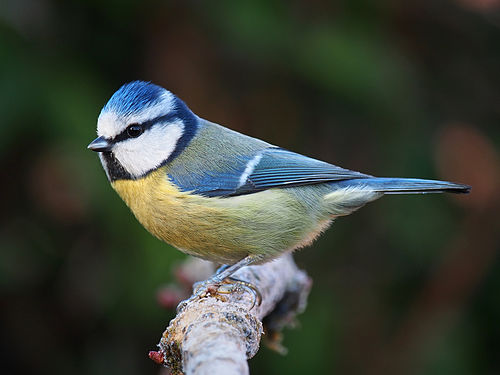


Blue Tit
Cyanistes caeruleus
- KingdomAnimalia (Animals)
- PhylumChordata (Chordates)
- ClassAves (Birds)
- OrderPasseriformes (Perching Birds)
- FamilyParidae (Tits, Chickadees, and Titmice)
- GenusCyanistes (Blue and Azure Tits)
- SpeciesCyanistes caeruleus (Blue Tit)
About the Blue Tit
The Eurasian blue tit (Cyanistes caeruleus) is a small passerine bird in the tit family, Paridae. It is easily recognised by its blue and yellow plumage and small size. The Eurasian blue tit is a widespread and common resident breeder throughout temperate and subarctic Europe and parts of western Asia. It inhabits deciduous or mixed woodlands, often with a high proportion of oak, and it is usually non-migratory. They typically nest in tree holes but readily adapt to using nest boxes when necessary. Their main rivals for nests and in the search for food are the larger, somewhat more common great tits (Parus major).
The Eurasian blue tit's diet consists mainly of insects and spiders. Outside of the breeding season, they also eat seeds and other plant-based foods. These birds are known for their acrobatic abilities; they can grip the outermost branches of trees and shrubs and hang upside down while searching for food.
The Eurasian blue tit was first described by Carl Linnaeus in 1758 in the 10th edition of his Systema Naturae under the binomial name Parus caeruleus. Parus is the classical Latin for a tit and caeruleus is the Latin for dark blue or caerulean. The type locality... Wikipedia →
Closest Relatives at Vanoise National Park

Coal Tit
Periparus ater

Great Tit
Parus major

Crested Tit
Lophophanes cristatus

Willow Tit
Poecile montanus

Marsh Tit
Poecile palustris

Chaffinch
Fringilla coelebs

Black Redstart
Phoenicurus ochruros

White Wagtail
Motacilla alba

Alpine Chough
Pyrrhocorax graculus

Eurasian Crag Martin
Ptyonoprogne rupestris

Carrion Crow
Corvus corone

Eurasian Blackbird
Turdus merula
Global Distribution
Where this species is recorded worldwide. Restricted to human observations from 2019 onwards — the same kind of record and the same period the probabilities on this page are built from, so collar-tracking studies, camera-trap arrays and museum specimens are excluded. Around Santa Rosa that removes 5,924 GPS fixes from a handful of tagged jaguars.
where this species is recorded (GBIF density — it tracks where observers go, not how likely a sighting is) · parks where it occurs — tap a pin for the sighting probability there
Parks Where Found
Quick answers
What are the chances of seeing a Blue Tit in Vanoise National Park?
About 40% of wildlife watchers report a Blue Tit sighting in Vanoise National Park, based on 143 verified sightings from GBIF citizen-science data.
When is the best time to see Blue Tit in Vanoise National Park?
March has the highest sighting rate for Blue Tit in Vanoise National Park in our monthly data.