
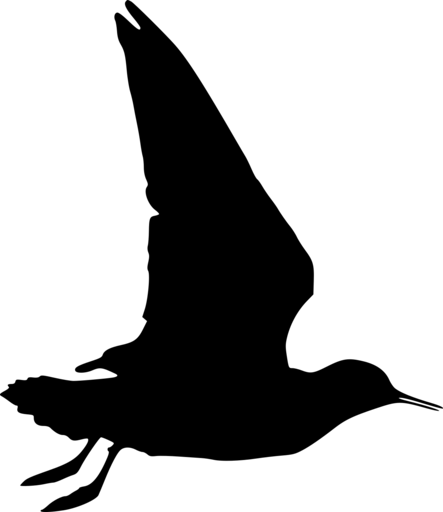
Red Phalarope
Phalaropus fulicarius
Silhouette: Oscar G. Miranda · PhyloPic
- KingdomAnimalia (Animals)
- PhylumChordata (Chordates)
- ClassAves (Birds)
- OrderCharadriiformes (Shorebirds and Allies)
- FamilyScolopacidae (Sandpipers and Allies)
- GenusPhalaropus (Phalaropes)
- SpeciesPhalaropus fulicarius (Red Phalarope)
About the Red Phalarope
The red phalarope or grey phalarope (Phalaropus fulicarius) is a small wader. This phalarope breeds in the Arctic regions of North America and Eurasia. It is migratory, and, unusually for a wader, migrates mainly on oceanic routes, wintering at sea on tropical oceans.
In 1750, the English naturalist George Edwards included an illustration and a description of the red phalarope in the third volume of his A Natural History of Uncommon Birds. He used the English name "The Red-footed Tringa". Edwards based his hand-coloured etching on a preserved specimen that had been brought to London from the Hudson Bay area of Canada by James Isham. When the Swedish naturalist Carl Linnaeus updated his Systema Naturae for the tenth edition in 1758, he included the red phalarope and placed it with phalaropes and sandpipers in the genus Tringa. Linnaeus included a brief description, coined the binomial name Tringa fulicaria and cited Edwards' work. The red phalarope is now one of three species placed in the genus Phalaropus that was introduced in 1760 by the French zoologist Mathurin Jacques Brisson. The species is monotypic: no subspecies are recognised.
The English and genus names for... Wikipedia →
Recent sightings of Red Phalarope in Acadia National Park
LIVEiNaturalistClosest Relatives at Acadia National Park

 Red-necked Phalarope
Phalaropus lobatus

 Spotted Sandpiper
Actitis macularius

 Greater Yellowlegs
Tringa melanoleuca

 Hudsonian Whimbrel
Numenius hudsonicus

 Purple Sandpiper
Calidris maritima

Least Sandpiper
Calidris minutilla

Semipalmated Sandpiper
Calidris pusilla

 Solitary Sandpiper
Tringa solitaria

 American Woodcock
Scolopax minor

Lesser Yellowlegs
Tringa flavipes

 Short-billed Dowitcher
Limnodromus griseus

 Ruddy Turnstone
Arenaria interpres
Global Distribution
Warmer areas are where this animal is recorded most often.
Parks Where Found
| # | Park | Country | Daily sighting probability |
|---|---|---|---|
| 1 | Cabo Blanco Absolute Nature Reserve | 🇨🇷 Costa Rica | |
| 2 | Fertő-Hanság National Park | 🇭🇺 Hungary | |
| 3 | El Vizcaíno Biosphere Reserve | 🇲🇽 Mexico | |
| 4 | Machalilla National Park | 🇪🇨 Ecuador | |
| 5 | Sierra de Guadarrama National Park | 🇪🇸 Spain | |
| 6 | Galápagos Islands | 🇪🇨 Ecuador | |
| 7 | Bahía de Loreto National Park | 🇲🇽 Mexico | |
| 8 | Doñana National Park | 🇪🇸 Spain | |
| 9 | Manuel Antonio National Park | 🇨🇷 Costa Rica | |
| 10 | Wadden Sea National Park | 🇩🇪 Germany | |
| 11 | Acadia National Park | 🇺🇸 United States | |
| 12 | Point Pelee National Park | 🇨🇦 Canada | |
| 13 | Snowdonia National Park | 🇬🇧 United Kingdom | |
| 14 | Chobe National Park | 🇧🇼 Botswana | |
| 15 | Isla del Coco National Park | 🇨🇷 Costa Rica | |
| 16 | Paracas National Reserve | 🇵🇪 Peru | |
| 17 | Katmai National Park | 🇺🇸 United States | |
| 18 | Kenai Fjords National Park | 🇺🇸 United States | |
| 19 | Hortobágy National Park | 🇭🇺 Hungary | |
| 20 | Cape Breton Highlands National Park | 🇨🇦 Canada | |
| 21 | Namib-Naukluft National Park | 🇳🇦 Namibia | |
| 22 | Vatnajokull National Park | 🇮🇸 Iceland |
Quick answers
What are the chances of seeing a Red Phalarope in Acadia National Park?
Under 5% of wildlife watchers report a Red Phalarope sighting in Acadia National Park, based on 29 verified sightings from GBIF citizen-science data.
When is the best time to see Red Phalarope in Acadia National Park?
August has the highest sighting rate for Red Phalarope in Acadia National Park in our monthly data.