


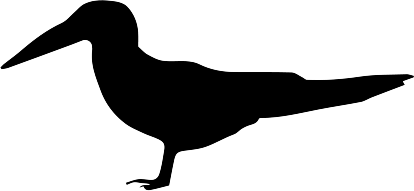
Black Skimmer
Rynchops niger
Silhouette: Daniel Nuñez-Leon · PhyloPic
- KingdomAnimalia (Animals)
- PhylumChordata (Chordates)
- ClassAves (Birds)
- OrderCharadriiformes (Shorebirds and Allies)
- FamilyLaridae (Gulls, Terns, and Skimmers)
- GenusRynchops (Skimmers)
- SpeciesRynchops niger (Black Skimmer)
About the Black Skimmer
The black skimmer (Rynchops niger) is a tern-like seabird, one of three similar bird species in the skimmer genus Rynchops in the gull family Laridae. It breeds in North and South America. Northern populations winter in the warmer waters of the Caribbean and the tropical and subtropical Pacific and Atlantic coasts, but South American populations make only shorter movements in response to annual floods which extend their feeding areas in the river shallows.
The black skimmer was described by the Swedish naturalist Carl Linnaeus in 1755 in the tenth edition of his Systema Naturae and given the binomial name Rynchops niger. The genus name Rynchops is from the Ancient Greek ῥυvχος/rhunkhos meaning "bill" and κοπτω/koptō meaning "to cut off". The specific niger is the Latin word for "black". The black skimmer is one of three species in the genus Rynchops.
There are three subspecies: The black skimmer is the largest of the three skimmer species. It measures 40–50 cm (16–20 in) long with a 107–127 cm (42–50 in) wingspan. This species ranges from 212 to 447 g (7.5 to 15.8 oz), with males averaging about 349 g (12.3 oz), as compared to the smaller females 254... Wikipedia →
Recent sightings of Black Skimmer in Bahía de Loreto National Park
LIVEiNaturalistClosest Relatives at Bahía de Loreto National Park

 Yellow-footed Gull
Larus livens

 Royal Tern
Thalasseus maximus

Heermann's Gull
Larus heermanni

 Ring-billed Gull
Larus delawarensis

 Elegant Tern
Thalasseus elegans

California Gull
Larus californicus

 Sabine's Gull
Xema sabini

 Caspian Tern
Hydroprogne caspia

 Bonaparte's Gull
Chroicocephalus philadelphia

 Forster's Tern
Sterna forsteri

 Laughing Gull
Leucophaeus atricilla

 American Herring Gull
Larus smithsonianus
Global Distribution
Warmer areas are where this animal is recorded most often.