


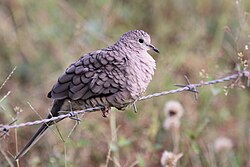

Inca Dove
Columbina inca
Silhouette: Sheatherius · PhyloPic
- KingdomAnimalia (Animals)
- PhylumChordata (Chordates)
- ClassAves (Birds)
- OrderColumbiformes (Pigeons and Doves)
- FamilyColumbidae (Pigeons and Doves)
- GenusColumbina (Small Ground Doves)
- SpeciesColumbina inca (Inca Dove)
About the Inca Dove
The Inca dove or Mexican dove (Columbina inca) is a small New World dove. The species was first described by French surgeon and naturalist René Lesson in 1847. It reaches a length of 16.5–23 cm (6.5–9.1 in) and weighs 30–58 g (1.1–2.0 oz). The Inca dove has an average wingspan of 28.5 cm and a max wingspan of 32 cm. It is a slender species, with a gray-brown body covered in feathers that resemble a scaled pattern. The tail is long and square and edged with white feathers that may flare out in flight. The underwings are reddish, like other ground doves, and upon takeoff, the wings produce a distinctive, quiet rattling noise.
The Inca dove ranges from Costa Rica in the south to the American Southwest in the north and is often common to abundant in suitable habitat. Its range has been expanding northward and southward the past few decades. Despite being named after the Inca Empire, this species does not occur in any of the lands that once constituted that empire. Inca doves are expanding their range in the north and south. This terrestrial species forms flocks in deserts, scrublands and cultivated areas and may also be found in urban settings where they... Wikipedia →
Recent sightings of Inca Dove in Celaque National Park
LIVEiNaturalist


Global Distribution
Warmer areas are where this animal is recorded most often.
Parks Where Found
Quick answers
What are the chances of seeing a Inca Dove in Celaque National Park?
About 10% of wildlife watchers report a Inca Dove sighting in Celaque National Park, based on 16 verified sightings from GBIF citizen-science data.
When is the best time to see Inca Dove in Celaque National Park?
September has the highest sighting rate for Inca Dove in Celaque National Park in our monthly data.