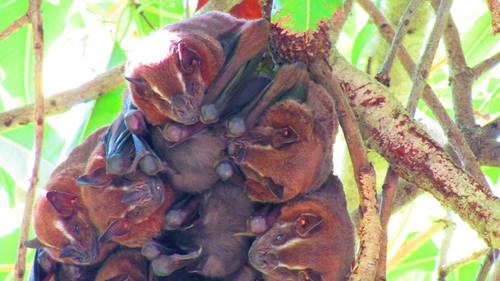

Great Fruit-eating Bat
Artibeus lituratus
Silhouette: Jorge D. Carballo-Morales, based on a photo by Mario Barroso · PhyloPic
- KingdomAnimalia (Animals)
- PhylumChordata (Chordates)
- ClassMammalia (Mammals)
- OrderChiroptera (Bats)
- FamilyPhyllostomidae (New World Leaf-nosed Bats)
- GenusArtibeus (Neotropical Fruit Bats)
- SpeciesArtibeus lituratus (Great Fruit-eating Bat)
About the Great Fruit-eating Bat
The great fruit-eating bat (Artibeus lituratus) is a bat species found from Mexico to Brazil and Argentina, as well as in Antigua and Barbuda, Barbados, Grenada, Martinique, Saint Lucia, Saint Vincent and the Grenadines and Trinidad and Tobago.
They weigh 10.5 grams (0.37 oz) at birth and grow to 65 grams (2.3 oz) as adults. The heart of A. lituratus contains unique membranous structures not seen in any other mammal. The functions of these differences are still being studied, but may possibly aid in keeping the heart in the correct position while upside down, flight assistance, and energy reservation.
In Panama, it has been found that some Artibeus lituratus fly with 18-23g fruits of Dipteryx panamensis (Fabaceae), which is a third of the animal's body weight, up to hundreds of meters from the parent tree. Reproductive damage within A. lituratus has been linked with the insecticide deltamethrin. Wikipedia →
Closest Relatives at Chagres National Park
 Amber Fruit-eating Bat
Artibeus ravus

 Greater Spear-nosed Bat
Phyllostomus hastatus

Common tent-making Bat
Uroderma bilobatum

Great Stripe-faced Bat
Vampyrodes major

Tomes's Sword-nosed Bat
Lonchorhina aurita

pale spear-nosed bat
Phyllostomus discolor

Proboscis Bat
Rhynchonycteris naso
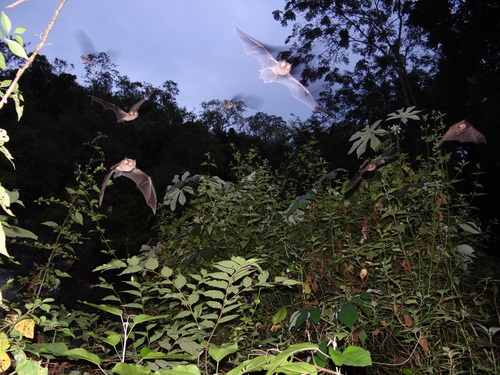
 Mesoamerican Common Mustached Bat
Pteronotus mesoamericanus

Greater Sac-winged Bat
Saccopteryx bilineata
Global Distribution
Warmer areas are where this animal is recorded most often.