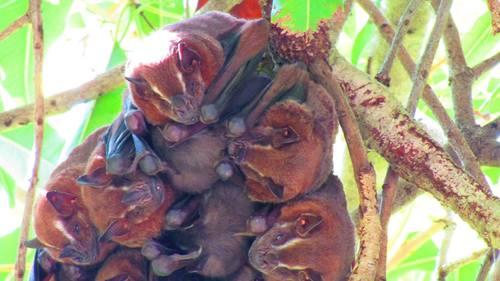

Great Fruit-eating Bat
Artibeus lituratus
Silhouette: Jorge D. Carballo-Morales, based on a photo by Mario Barroso · PhyloPic
- KingdomAnimalia (Animals)
- PhylumChordata (Chordates)
- ClassMammalia (Mammals)
- OrderChiroptera (Bats)
- FamilyPhyllostomidae (New World Leaf-nosed Bats)
- GenusArtibeus (Neotropical Fruit Bats)
- SpeciesArtibeus lituratus (Great Fruit-eating Bat)
About the Great Fruit-eating Bat
The great fruit-eating bat (Artibeus lituratus) is a bat species found from Mexico to Brazil and Argentina, as well as in Antigua and Barbuda, Barbados, Grenada, Martinique, Saint Lucia, Saint Vincent and the Grenadines and Trinidad and Tobago.
They weigh 10.5 grams (0.37 oz) at birth and grow to 65 grams (2.3 oz) as adults. The heart of A. lituratus contains unique membranous structures not seen in any other mammal. The functions of these differences are still being studied, but may possibly aid in keeping the heart in the correct position while upside down, flight assistance, and energy reservation.
In Panama, it has been found that some Artibeus lituratus fly with 18-23g fruits of Dipteryx panamensis (Fabaceae), which is a third of the animal's body weight, up to hundreds of meters from the parent tree. Reproductive damage within A. lituratus has been linked with the insecticide deltamethrin. Wikipedia →
Recent sightings of Great Fruit-eating Bat in Cuyabeno Wildlife Reserve
LIVEiNaturalistClosest Relatives at Cuyabeno Wildlife Reserve

 Dark Fruit-eating Bat
Artibeus obscurus
Andersen's Fruit-eating Bat
Artibeus anderseni

 Greater Spear-nosed Bat
Phyllostomus hastatus

MacConnell's bat
Mesophylla macconnelli

Bidentate Yellow-eared Bat
Vampyriscus bidens

Northern Little Yellow-eared Bat
Vampyressa thyone

Fischer's little fruit bat
Rhinophylla fischerae

Striped Spearnosed Bat
Gardnerycteris crenulatum
Gianna's Yellow-shouldered Bat
Sturnira giannae

Silky Short-Tailed Bat
Carollia brevicaudum

Pygmy Round-eared Bat
Lophostoma brasiliense

chestnut short-tailed bat
Carollia castanea
Global Distribution
Warmer areas are where this animal is recorded most often.
Parks Where Found
Quick answers
What are the chances of seeing a Great Fruit-eating Bat in Cuyabeno Wildlife Reserve?
About 10% of wildlife watchers report a Great Fruit-eating Bat sighting in Cuyabeno Wildlife Reserve, based on 6 verified sightings from GBIF citizen-science data.
When is the best time to see Great Fruit-eating Bat in Cuyabeno Wildlife Reserve?
April has the highest sighting rate for Great Fruit-eating Bat in Cuyabeno Wildlife Reserve in our monthly data.