


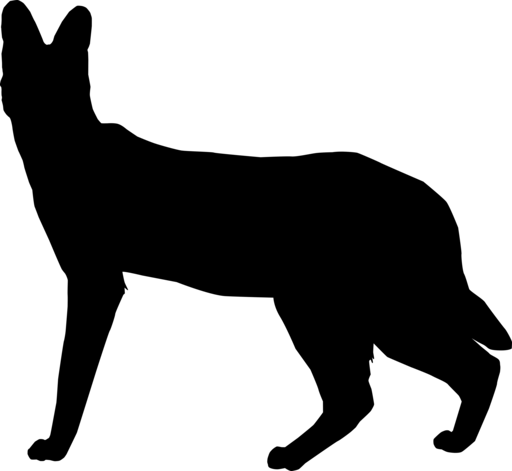
Serval
Leptailurus serval
Silhouette: Margot Michaud · PhyloPic
- KingdomAnimalia (Animals)
- PhylumChordata (Chordates)
- ClassMammalia (Mammals)
- OrderCarnivora (Carnivorans)
- FamilyFelidae (Felids)
- GenusLeptailurus (Servals)
- SpeciesLeptailurus serval (Serval)
About the Serval
The serval (Leptailurus serval) is a wild small cat native to Africa. It is widespread in sub-Saharan countries, where it inhabits grasslands, wetlands, moorlands and bamboo thickets. Across its range, it occurs in protected areas, and hunting it is either prohibited or regulated in range countries.
It is the sole member of the genus Leptailurus. Three subspecies are recognised. The serval is a slender, medium-sized cat that stands 54–62 cm (21–24 in) tall at the shoulder and has a weight range of approximately 9–18 kg (20–40 lb). It is characterised by a small head, large ears, a golden-yellow to buff coat spotted and striped with black, and a short, black-tipped tail. The serval has the longest legs of any cat relative to its body size.
The serval is a solitary carnivore and active both by day and at night. It preys on rodents, particularly vlei rats, small birds, frogs, insects, and reptiles, using its hearing to locate prey. It leaps over 2 m (6 ft 7 in) above the ground to land on the prey on its forefeet, and kills it with a bite to the neck or the head. Both sexes establish highly overlapping home ranges of 10 to 32 km2 (3.9 to 12.4 sq mi), and mark them with feces and saliva. Mating takes place at different times of the year in different parts of their range, but typically once or twice a year in an area. After a gestational period of two to three months, a litter of one to four kittens is born. They are weaned at the age of one month and begin hunting on their own at six months of age. They leave their mother at the age of around 12 months. Wikipedia →
Recent sightings of Serval in Gorongosa National Park
LIVEiNaturalistClosest Relatives at Gorongosa National Park

 Lion
Panthera leo

 Painted Hunting Dog
Lycaon pictus

 African Civet
Civettictis civetta

 Slender Mongoose
Galerella sanguinea

 Egyptian Mongoose
Herpestes ichneumon

 Banded Mongoose
Mungos mungo

 Honey Badger
Mellivora capensis

 Spotted Hyena
Crocuta crocuta

 Marsh Mongoose
Atilax paludinosus
Global Distribution
Warmer areas are where this animal is recorded most often.