


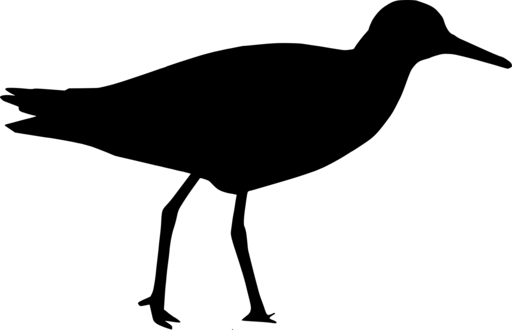
Dunlin
Calidris alpina
Silhouette: Edwin Price · PhyloPic
- KingdomAnimalia (Animals)
- PhylumChordata (Chordates)
- ClassAves (Birds)
- OrderCharadriiformes (Shorebirds and Allies)
- FamilyScolopacidae (Sandpipers and Allies)
- GenusCalidris (Calidris Sandpipers)
- SpeciesCalidris alpina (Dunlin)
About the Dunlin
The dunlin (Calidris alpina) is a small wader in the genus Calidris. The English name is a dialect form of "dunling", first recorded in 1531–1532. It derives from dun, "dull brown", with the suffix -ling, meaning a person or thing with the given quality.
It is a circumpolar breeder in Arctic or subarctic regions. Birds that breed in western Europe are short-distance migrants largely staying on western and southern European and northwest African coasts; those breeding in far northern Europe and Asia are long-distance migrants, wintering south to Africa, southeast and west Asia. Birds that breed in Alaska and the Canadian Arctic migrate short distances to the Pacific and Atlantic coasts of North America, although those nesting in northern Alaska overwinter in Asia.
The dunlin was formally described by the Swedish naturalist Carl Linnaeus in 1758 in the tenth edition of his Systema Naturae under the binomial name Tringa alpina. Linnaeus specified the location as Lapland. This species was formerly placed (with the other "stints") by some American authors in the genus Erolia, but is now placed with 23 other sandpipers in the genus Calidris that was introduced in 1804 by the... Wikipedia →
Recent sightings of Dunlin in Katmai National Park
LIVEiNaturalistClosest Relatives at Katmai National Park

 Least Sandpiper
Calidris minutilla

Western Sandpiper
Calidris mauri

Rock Sandpiper
Calidris ptilocnemis

 Red Knot
Calidris canutus

 Sanderling
Calidris alba

Surfbird
Calidris virgata

Semipalmated Sandpiper
Calidris pusilla

Pectoral Sandpiper
Calidris melanotos

 Greater Yellowlegs
Tringa melanoleuca

 Spotted Sandpiper
Actitis macularius

 Wilson's Snipe
Gallinago delicata

 Lesser Yellowlegs
Tringa flavipes
Global Distribution
Warmer areas are where this animal is recorded most often.