



White-winged Widowbird
Euplectes albonotatus
Silhouette: Sheatherius · PhyloPic
- KingdomAnimalia (Animals)
- PhylumChordata (Chordates)
- ClassAves (Birds)
- OrderPasseriformes (Perching Birds)
- FamilyPloceidae (Weavers and Allies)
- GenusEuplectes (Bishops and Widowbirds)
- SpeciesEuplectes albonotatus (White-winged Widowbird)
About the White-winged Widowbird
The white-winged widowbird (Euplectes albonotatus) is a species of passerine bird in the family Ploceidae native to Africa south of the Sahara. It is highly sexually dimorphic in its breeding season, during which the male's yellow plumage turns dark and he gains more white feathers, contrasting with the female's predominantly pale coloration. Three subspecies are recognised.
The white-winged widowbird was first described by the American ornithologist John Cassin in 1848. Hybrids with "red bishops", probably northern red bishop (E. franciscanus), have been reported in captivity. Non-captive interbreeding of race eques with nominate appears to occur in southern Tanzania, but they appear to stay segregated in Burundi and western Tanzania. A proposal has been made for race sassii, which is found along the northwestern shore of Lake Tanganyika. Alternate common names include: white-fronted/white-shouldered widowbird, white-winged/white-shouldered whydah, long-tailed black whydah.
Three subspecies of the white-winged widowbird are now recognized. E. a. albonotatus (Cassin, 1848), inhabits Tanzania, the Democratic Republic of the Congo, Zambia, Malawi, Namibia... Wikipedia →
Recent sightings of White-winged Widowbird in Meru National Park
LIVEiNaturalistClosest Relatives at Meru National Park

 White-headed Buffalo-Weaver
Dinemellia dinemelli

Red-billed Buffalo-Weaver
Bubalornis niger

Chestnut Weaver
Ploceus rubiginosus

Golden Palm Weaver
Ploceus bojeri

Red-headed Weaver
Anaplectes rubriceps

Red-billed Quelea
Quelea quelea
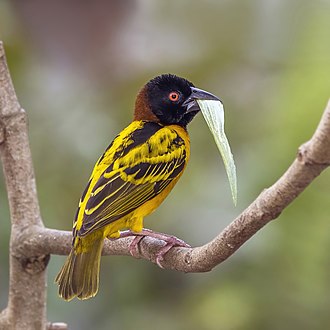
Village Weaver
Ploceus cucullatus

Lesser Masked-Weaver
Ploceus intermedius

African Golden-Weaver
Ploceus subaureus

Grosbeak Weaver
Amblyospiza albifrons

Vitelline Masked-Weaver
Ploceus vitellinus

Holub's Golden-Weaver
Ploceus xanthops
Global Distribution
Warmer areas are where this animal is recorded most often.
Parks Where Found
Quick answers
What are the chances of seeing a White-winged Widowbird in Meru National Park?
About 10% of wildlife watchers report a White-winged Widowbird sighting in Meru National Park, based on 10 verified sightings from GBIF citizen-science data.
When is the best time to see White-winged Widowbird in Meru National Park?
June has the highest sighting rate for White-winged Widowbird in Meru National Park in our monthly data.