


Eurasian Wren
Troglodytes troglodytes
- KingdomAnimalia (Animals)
- PhylumChordata (Chordates)
- ClassAves (Birds)
- OrderPasseriformes (Perching Birds)
- FamilyTroglodytidae (Wrens)
- GenusTroglodytes (Troglodytes Wrens)
- SpeciesTroglodytes troglodytes (Eurasian Wren)
About the Eurasian Wren
The Eurasian wren (Troglodytes troglodytes) is a very small insectivorous bird and the only member of the wren family found in the Old World, specifically in Eurasia and Africa (Maghreb). In Anglophone Europe, it is commonly known simply as the wren. It has a very short tail which is often held erect, a short neck and a relatively long thin bill. It is russet brown above, paler buff-brown below, overall finely barred darker, and has a cream buff supercilium. The sexes are alike.
The Eurasian wren occurs in Europe and across the Palearctic, including a belt of Asia from northern Iran and Afghanistan across to Japan. It is migratory in the northern (particularly northeastern), parts of its range, and sedentary in the west and south of its range. It is also highly polygynous, an unusual mating system for passerines. The species was formerly lumped together with winter wren (Troglodytes hiemalis) of eastern North America and Pacific wren (Troglodytes pacificus) of western North America under the merged name of northern wren.
The scientific name is taken from the Greek word "troglodytes" (from τρώγλη troglē "hole", and δῠ́ειν dyein, "creep"), meaning "hole-dweller", and refers to its habit of disappearing into cavities or crevices whilst hunting arthropods or to roost. The taxonomy of the genus Troglodytes is currently unresolved, as recent molecular studies have suggested that the genera Cistothorus and Thryorchilus are within the clade currently defined by Troglodytes. Wikipedia →
Closest Relatives at Plitvice Lakes National Park

Chaffinch
Fringilla coelebs

Great Tit
Parus major

Eurasian Blackbird
Turdus merula

European Robin
Erithacus rubecula

Eurasian Nuthatch
Sitta europaea

Marsh Tit
Poecile palustris

Blackcap
Sylvia atricapilla

Common Chiffchaff
Phylloscopus collybita

Song Thrush
Turdus philomelos

Grey Wagtail
Motacilla cinerea

Eurasian Jay
Garrulus glandarius
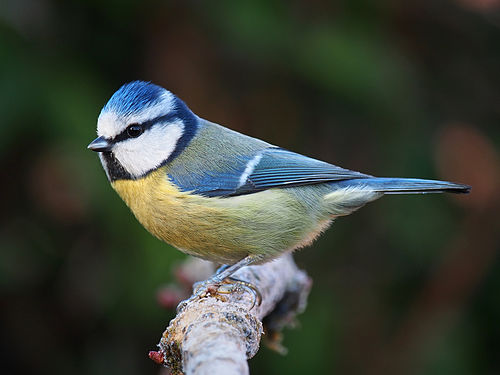
Blue Tit
Cyanistes caeruleus
Global Distribution
Where this species is recorded worldwide. Restricted to human observations from 2019 onwards — the same kind of record and the same period the probabilities on this page are built from, so collar-tracking studies, camera-trap arrays and museum specimens are excluded. Around Santa Rosa that removes 5,924 GPS fixes from a handful of tagged jaguars.
where this species is recorded (GBIF density — it tracks where observers go, not how likely a sighting is) · parks where it occurs — tap a pin for the sighting probability there
Parks Where Found
Quick answers
What are the chances of seeing a Eurasian Wren in Plitvice Lakes National Park?
About 30% of wildlife watchers report a Eurasian Wren sighting in Plitvice Lakes National Park, based on 88 verified sightings from GBIF citizen-science data.
When is the best time to see Eurasian Wren in Plitvice Lakes National Park?
November has the highest sighting rate for Eurasian Wren in Plitvice Lakes National Park in our monthly data.