


Hawfinch
Coccothraustes coccothraustes
- KingdomAnimalia (Animals)
- PhylumChordata (Chordates)
- ClassAves (Birds)
- OrderPasseriformes (Perching Birds)
- FamilyFringillidae (Finches, Euphonias, and Allies)
- GenusCoccothraustes
- SpeciesCoccothraustes coccothraustes (Hawfinch)
About the Hawfinch
The hawfinch (Coccothraustes coccothraustes) is a passerine bird in the finch family Fringillidae. It is the only extant species placed in the genus Coccothraustes. Its closest living relatives are the genus Eophona of East Asia, and Hesperiphona of Central and North America.
This bird breeds across Europe and temperate Asia (Palearctic). It is mainly resident in Europe, but many Asian birds migrate further south in the winter. It is a rare vagrant to the western islands of Alaska. Deciduous or mixed woodland, including parkland, with large trees – especially hornbeam – is favoured for breeding. The hawfinch builds its nest in a bush or tree, and lays 2–7 eggs. The food is mainly seeds and fruit kernels, especially those of cherries, which it cracks with its powerful bill. This large finch species is usually seen in a pair or small group.
The 16.5–18 cm long hawfinch is a bulky bull-headed bird, which appears very short-tailed in flight. Its head is orange-brown with a black eyestripe and bib, and a massive bill, which is black in summer but paler in winter. The upper parts are dark brown and the underparts orange.
The white wing bars and tail tip are striking in flight. The sexes are similar. The call is a hard chick. The song of this unobtrusive bird is quiet and mumbled. Wikipedia →
Closest Relatives at Plitvice Lakes National Park

Chaffinch
Fringilla coelebs

European Greenfinch
Chloris chloris

Eurasian Goldfinch
Carduelis carduelis

European Serin
Serinus serinus

Brambling
Fringilla montifringilla

Eurasian Siskin
Spinus spinus
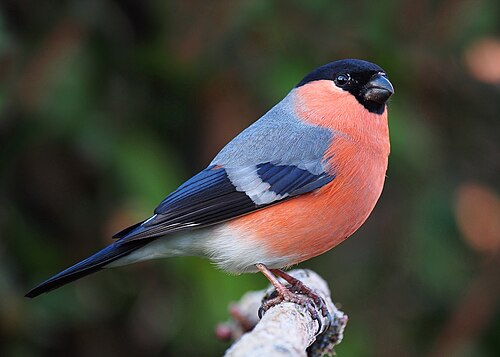
Eurasian Bullfinch
Pyrrhula pyrrhula

Red Crossbill
Loxia curvirostra

Great Tit
Parus major

Eurasian Blackbird
Turdus merula

European Robin
Erithacus rubecula

Eurasian Nuthatch
Sitta europaea
Global Distribution
Where this species is recorded worldwide. Restricted to human observations from 2019 onwards — the same kind of record and the same period the probabilities on this page are built from, so collar-tracking studies, camera-trap arrays and museum specimens are excluded. Around Santa Rosa that removes 5,924 GPS fixes from a handful of tagged jaguars.
where this species is recorded (GBIF density — it tracks where observers go, not how likely a sighting is) · parks where it occurs — tap a pin for the sighting probability there
Parks Where Found
Quick answers
What are the chances of seeing a Hawfinch in Plitvice Lakes National Park?
About 30% of wildlife watchers report a Hawfinch sighting in Plitvice Lakes National Park, based on 77 verified sightings from GBIF citizen-science data.
When is the best time to see Hawfinch in Plitvice Lakes National Park?
April has the highest sighting rate for Hawfinch in Plitvice Lakes National Park in our monthly data.