


Icterine Warbler
Hippolais icterina
- KingdomAnimalia (Animals)
- PhylumChordata (Chordates)
- ClassAves (Birds)
- OrderPasseriformes (Perching Birds)
- FamilyAcrocephalidae (Reed Warblers and Allies)
- GenusHippolais
- SpeciesHippolais icterina (Icterine Warbler)
About the Icterine Warbler
The icterine warbler (Hippolais icterina) is an Old World warbler in the tree warbler genus Hippolais. It breeds in mainland Europe except the southwest, where it is replaced by its western counterpart, the melodious warbler. It is migratory, wintering in sub-Saharan Africa.
A fairly big warbler with a large head, broad-based bill and long wings with a quite short square-ended tail. The upperparts are greyish-green and the underparts are uniformly light yellow. It has pale lores and a rather vague yellowish supercilium with a pale eye ring. Other distinguishing features include a panel on the folded wings formed by pale edges to the secondary feathers and tertiary feathers and the grey, sometimes bluish legs.
The icterine warbler is a bird of woodland rather than forest, preferring woodland edge or glades, favouring the crowns of well-spaced trees with tall undergrowth. It prefers broad-leafed trees, but may be found in conifers mixed with broad-leafed trees. It will use copses, orchards, parks, gardens, shelterbelts and tall hedges interspersed with trees.
The song is a fast nasal babbling incorporating mimicry of other species. The call... Wikipedia →
Closest Relatives at Plitvice Lakes National Park

Chaffinch
Fringilla coelebs

Great Tit
Parus major

Eurasian Blackbird
Turdus merula

European Robin
Erithacus rubecula

Eurasian Nuthatch
Sitta europaea

Marsh Tit
Poecile palustris

Blackcap
Sylvia atricapilla

Common Chiffchaff
Phylloscopus collybita

Song Thrush
Turdus philomelos

Grey Wagtail
Motacilla cinerea

Eurasian Jay
Garrulus glandarius
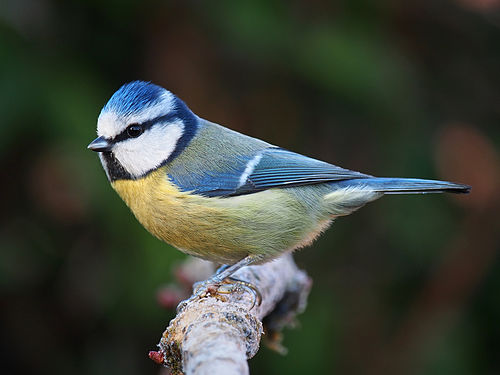
Blue Tit
Cyanistes caeruleus
Global Distribution
Where this species is recorded worldwide. Restricted to human observations from 2019 onwards — the same kind of record and the same period the probabilities on this page are built from, so collar-tracking studies, camera-trap arrays and museum specimens are excluded. Around Santa Rosa that removes 5,924 GPS fixes from a handful of tagged jaguars.
where this species is recorded (GBIF density — it tracks where observers go, not how likely a sighting is) · parks where it occurs — tap a pin for the sighting probability there