


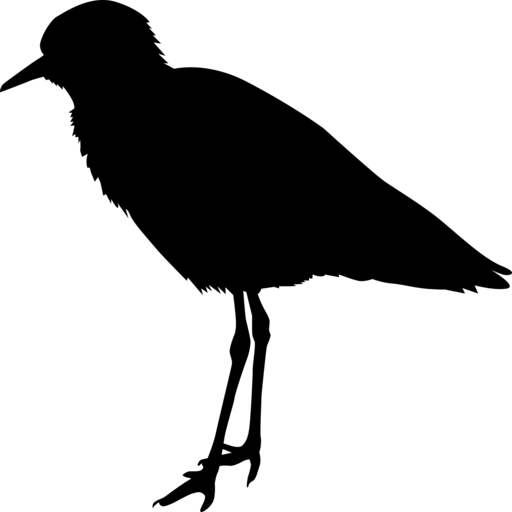
Long-toed Lapwing
Vanellus crassirostris
Silhouette: Rebecca Groom · PhyloPic
- KingdomAnimalia (Animals)
- PhylumChordata (Chordates)
- ClassAves (Birds)
- OrderCharadriiformes (Shorebirds and Allies)
- FamilyCharadriidae (Plovers and Lapwings)
- GenusVanellus (Lapwings)
- SpeciesVanellus crassirostris (Long-toed Lapwing)
About the Long-toed Lapwing
The long-toed lapwing (Vanellus crassirostris), also known as the long-toed plover, is a species of wading bird in the lapwing subfamily, within the family Charadriidae. It is mainly sedentary and found across central and eastern Africa, from Chad and South Sudan in the north to Mozambique in the southeast of its range. It is one of 13 species of ground-nesting lapwings found in Africa.
The long-toed lapwing was formally described by Gustav Hartlaub in 1855 under the binomial name Chettusia crassirostris in the Journal für Ornithologie. The species is now one of 24 placed with the other lapwings in the genus Vanellus which was described in 1760 by Mathurin Jacques Brisson, a French zoologist. Vanellus comes from the Medieval Latin 'vannus', meaning winnowing fan, a reference to the sound of the wings of lapwings in flight. The species name crassirostris means thick-billed.
The long-toed lapwing was formerly placed within the monospecific genus Hemiparra, but now resides in the genus Vanellus with other lapwings. Vanellus is one of 10 genera of the family Charadriidae, which aside from the lapwings also contains plovers and dotterels. Members of Charadriidae generally... Wikipedia →
Recent sightings of Long-toed Lapwing in Ruaha National Park
LIVEiNaturalistClosest Relatives at Ruaha National Park

 White-headed Lapwing
Vanellus albiceps

Crowned Lapwing
Vanellus coronatus

Blacksmith Lapwing
Vanellus armatus

Spur-winged Lapwing
Vanellus spinosus

African Wattled Lapwing
Vanellus senegallus

Senegal Lapwing
Vanellus lugubris

 Caspian Plover
Charadrius asiaticus

 Water Thick-knee
Burhinus vermiculatus

 Common Sandpiper
Actitis hypoleucos

 Black-winged Stilt
Himantopus himantopus

 Wood Sandpiper
Tringa glareola

Spotted Thick-knee
Burhinus capensis
Global Distribution
Warmer areas are where this animal is recorded most often.