


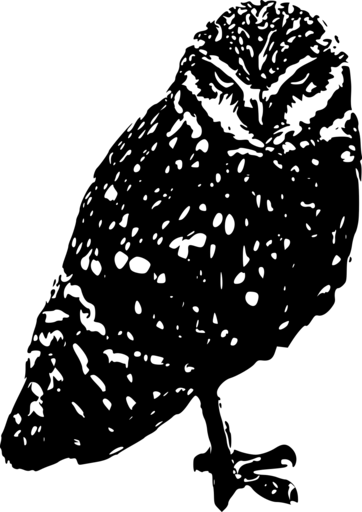
Burrowing Owl
Athene cunicularia
Silhouette: Caleb M. Gordon · PhyloPic
- KingdomAnimalia (Animals)
- PhylumChordata (Chordates)
- ClassAves (Birds)
- OrderStrigiformes (Owls)
- FamilyStrigidae (Typical Owls)
- GenusAthene (Little Owls and Allies)
- SpeciesAthene cunicularia (Burrowing Owl)
About the Burrowing Owl
The burrowing owl (Athene cunicularia) is a small, long-legged, primarily terrestrial—though not flightless—species of owl native to the open landscapes of North and South America. They are typically found in grasslands, rangelands, agricultural areas, deserts, or any other open, dry area with low vegetation. They nest and roost in burrows, and, despite their common name, do not often construct these dwellings themselves, rather repurposing disused burrows or tunnels previously excavated and inhabited by other species, such as American badgers (Taxidea taxus), foxes (Vulpes sp.), ground squirrels or prairie dogs (Cynomys spp.), among others.
Unlike most owls, burrowing owls are often active during the day, although they tend to avoid the heat of midday. But, similar to many other species of owls, they are mostly crepuscular hunters, as they can utilize their night vision and attuned hearing to maximum potential during sunrise and sunset. Having evolved to live on open grasslands and prairie habitat (as well as badlands, chaparral and desert ecosystems), as opposed to dense forest, the burrowing owl has developed longer legs than other owls, a trait which enables it to sprint when pursuing its prey, not dissimilarly to the greater roadrunner, as well as providing momentum when taking flight; however, burrowing owls typically only become airborne for short bursts, such as when fleeing threats, and typically do not fly very high off of the ground. Wikipedia →
Recent sightings of Burrowing Owl in Serra da Canastra National Park
LIVEiNaturalistClosest Relatives at Serra da Canastra National Park


Global Distribution
Warmer areas are where this animal is recorded most often.
Parks Where Found
Quick answers
What are the chances of seeing a Burrowing Owl in Serra da Canastra National Park?
About 30% of wildlife watchers report a Burrowing Owl sighting in Serra da Canastra National Park, based on 180 verified sightings from GBIF citizen-science data.
When is the best time to see Burrowing Owl in Serra da Canastra National Park?
October has the highest sighting rate for Burrowing Owl in Serra da Canastra National Park in our monthly data.