


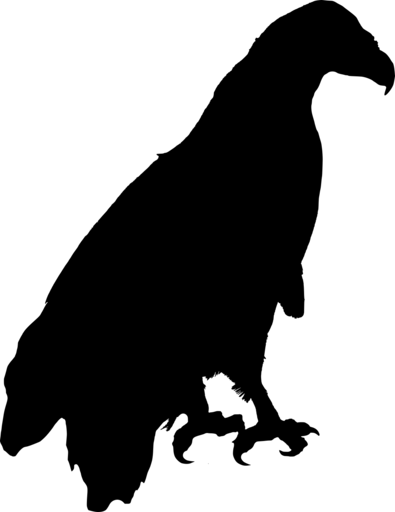
Palmnut Vulture
Gypohierax angolensis
Silhouette: Kai Caspar · PhyloPic
- KingdomAnimalia (Animals)
- PhylumChordata (Chordates)
- ClassAves (Birds)
- OrderAccipitriformes (Hawks, Eagles, Kites, and Allies)
- FamilyAccipitridae (Hawks, Eagles, and Kites)
- GenusGypohierax (Palm-nut Vultures)
- SpeciesGypohierax angolensis (Palmnut Vulture)
About the Palmnut Vulture
The palm-nut vulture (Gypohierax angolensis) or vulturine fish eagle, is a large bird of prey in the family Accipitridae (which also includes many other diurnal raptors such as kites, buzzards and harriers, vultures, and eagles). It is the only member of the genus Gypohierax.
This bird is an Old World vulture (only distantly related to the New World vultures, which are in a separate family, the Cathartidae). It breeds in forest and savannah across sub-Saharan Africa, usually near water, its range coinciding with that of the oil and Raffia palms. It is quite approachable, like many African vultures, and can be seen near habitation, even on large hotel lawns in the tourist areas of countries such as the Gambia.
The palm-nut vulture was formally described in 1788 by the German naturalist Johann Friedrich Gmelin in his revised and expanded edition of Carl Linnaeus's Systema Naturae. He placed it with the eagles, hawks and falcons in the genus Falco and coined the binomial name Falco angolensis. Gmelin based his description on the "Angola vulture" that had been described in 1781 by the English ornithologist John Latham in his multi-volume work A General Synopsis of Birds.... Wikipedia →
Recent sightings of Palmnut Vulture in Volcanoes National Park
LIVEiNaturalistClosest Relatives at Volcanoes National Park

 Black Kite
Milvus migrans

 Augur Buzzard
Buteo augur

Mountain Buzzard
Buteo oreophilus

 African Harrier-Hawk
Polyboroides typus

Hooded Vulture
Necrosyrtes monachus

Long-crested Eagle
Lophaetus occipitalis

 Common Buzzard
Buteo buteo

Lizard Buzzard
Kaupifalco monogrammicus

 Rufous-chested Sparrowhawk
Accipiter rufiventris

Martial Eagle
Polemaetus bellicosus

 Tawny Eagle
Aquila rapax

 Ayres's Hawk-Eagle
Hieraaetus ayresii
Global Distribution
Warmer areas are where this animal is recorded most often.
Parks Where Found
Quick answers
What are the chances of seeing a Palmnut Vulture in Volcanoes National Park?
Under 5% of wildlife watchers report a Palmnut Vulture sighting in Volcanoes National Park, based on 8 verified sightings from GBIF citizen-science data.
When is the best time to see Palmnut Vulture in Volcanoes National Park?
September has the highest sighting rate for Palmnut Vulture in Volcanoes National Park in our monthly data.