



Skylark
Alauda arvensis
Silhouette: Gossipguy and T. Michael Keesey · PhyloPic
- KingdomAnimalia (Animals)
- PhylumChordata (Chordates)
- ClassAves (Birds)
- OrderPasseriformes (Perching Birds)
- FamilyAlaudidae (Larks)
- GenusAlauda (Skylarks)
- SpeciesAlauda arvensis (Skylark)
About the Skylark
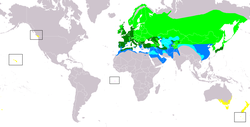
The Eurasian skylark (Alauda arvensis), commonly referred to in Europe as the lark, is a passerine bird in the lark family, Alaudidae. It is a widespread species found across Europe and the Palearctic with introduced populations in Australia, New Zealand, Canada, and on the Hawaiian Islands. It is a bird of open farmland and heath, known for the song of the male, which is delivered in hovering flight from heights of 50 to 100 metres (160 to 330 ft). The sexes are alike. It is streaked greyish-brown above and on the breast and has a buff-white belly.
The female Eurasian skylark builds an open nest in a shallow depression on open ground well away from trees, bushes and hedges. She lays three to five eggs which she incubates for around 11 days. The chicks are fed by both parents but leave the nest after eight to ten days, well before they can fly. They scatter and hide in the vegetation but continue to be fed by the parents until they can fly at 18 to 20 days of age. Nests are subject to high predation rates by larger birds and small mammals. The parents can have several broods in a single season.
The Eurasian skylark was described by the Swedish naturalist... Wikipedia →
Recent sightings of Skylark in Abel Tasman National Park
LIVEiNaturalistClosest Relatives at Abel Tasman National Park

 Tūī
Tūī
Prosthemadera novaeseelandiae

 New Zealand Fantail
Rhipidura fuliginosa

 Silvereye
Zosterops lateralis

 Welcome Swallow
Hirundo neoxena

 Eurasian Blackbird
Turdus merula

New Zealand Bellbird
Anthornis melanura

 Chaffinch
Fringilla coelebs

 Song Thrush
Turdus philomelos

 Grey Warbler
Gerygone igata

 Eurasian Goldfinch
Carduelis carduelis

 European Starling
Sturnus vulgaris

 Yellowhammer
Emberiza citrinella
Global Distribution
Warmer areas are where this animal is recorded most often.
Parks Where Found
Quick answers
What are the chances of seeing a Skylark in Abel Tasman National Park?
About 10% of wildlife watchers report a Skylark sighting in Abel Tasman National Park, based on 57 verified sightings from GBIF citizen-science data.
When is the best time to see Skylark in Abel Tasman National Park?
January has the highest sighting rate for Skylark in Abel Tasman National Park in our monthly data.