


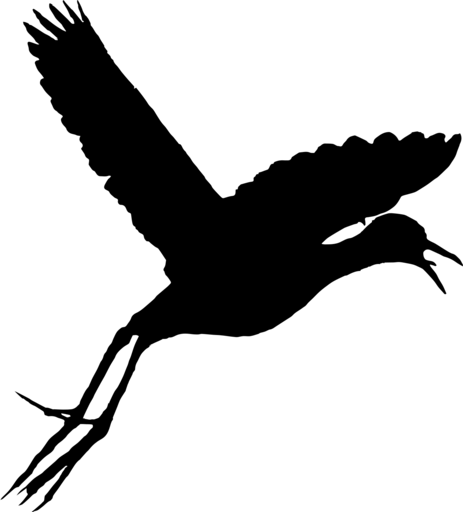
Northern Jacana
Jacana spinosa
Silhouette: Burton Robert, USFWS · PhyloPic
- KingdomAnimalia (Animals)
- PhylumChordata (Chordates)
- ClassAves (Birds)
- OrderCharadriiformes (Shorebirds and Allies)
- FamilyJacanidae (Jacanas)
- GenusJacana (New World Jacanas)
- SpeciesJacana spinosa (Northern Jacana)
About the Northern Jacana
The northern jacana or northern jaçana (Jacana spinosa) is a wader which is known as a resident breeder from coastal Mexico to western Panama, and on Cuba, Jamaica and Hispaniola in the Caribbean. It is sometimes known to breed in Texas, United States, and has also been recorded on several occasions as a vagrant in Arizona. The jacanas are a group of wetland birds, which are identifiable by their huge feet and claws, which enable them to walk on floating vegetation in the shallow lakes that are their preferred habitat. In Jamaica, this bird is also known as the 'Jesus bird', as it appears to walk on water.
The northern jacana was formally described in 1758 by the Swedish naturalist Carl Linnaeus in the tenth edition of his Systema Naturae. He placed it with the coots in the genus Fulica and coined the binomial name Fulica spinosa. Linnaeus based his account on the "spur-winged water hen" that had been described and illustrated in 1743 by the English naturalist George Edwards in his A Natural History of Uncommon Birds. Edwards had borrowed a specimen from the collector Hans Sloane that had been preserved in alcohol. Edwards mistakenly believed his specimen had been collected... Wikipedia →
Recent sightings of Northern Jacana in Bastimentos Island National Marine Park
LIVEiNaturalistClosest Relatives at Bastimentos Island National Marine Park

 Wattled Jacana
Jacana jacana

 Royal Tern
Thalasseus maximus

 Spotted Sandpiper
Actitis macularius

 Hudsonian Whimbrel
Numenius hudsonicus

 Laughing Gull
Leucophaeus atricilla

 Black Tern
Chlidonias niger

 Cabot's Tern
Thalasseus acuflavidus

 Whimbrel
Numenius phaeopus

 Semipalmated Plover
Charadrius semipalmatus

Sandwich Tern
Thalasseus sandvicensis

 Southern Lapwing
Vanellus chilensis

 Parasitic Jaeger
Stercorarius parasiticus
Global Distribution
Warmer areas are where this animal is recorded most often.
Parks Where Found
Quick answers
What are the chances of seeing a Northern Jacana in Bastimentos Island National Marine Park?
About 10% of wildlife watchers report a Northern Jacana sighting in Bastimentos Island National Marine Park, based on 330 verified sightings from GBIF citizen-science data.
When is the best time to see Northern Jacana in Bastimentos Island National Marine Park?
November has the highest sighting rate for Northern Jacana in Bastimentos Island National Marine Park in our monthly data.