


Spotted Redshank
Tringa erythropus
- KingdomAnimalia (Animals)
- PhylumChordata (Chordates)
- ClassAves (Birds)
- OrderCharadriiformes (Shorebirds and Allies)
- FamilyScolopacidae (Sandpipers and Allies)
- GenusTringa (Shanks, Tattlers, and Allies)
- SpeciesTringa erythropus (Spotted Redshank)
About the Spotted Redshank
The spotted redshank (Tringa erythropus) is a wader (shorebird) in the large bird family Scolopacidae. It breeds across northern Scandinavia and the northern Palearctic and migrates south to the Mediterranean, the southern British Isles, France, tropical Africa, and tropical Asia for the winter. It is an occasional vagrant to Australia and North America.
The spotted redshank was described by German zoologist Peter Simon Pallas in 1764 and given the binomial name Scolopax erythropus. It is a monotypic species, with no recognised subspecies. Taxonomically, it forms a close-knit group with several other large Tringa species, with molecular sequencing showing it to be a sister clade to that containing the greater yellowlegs and the common greenshank. The genus name Tringa is the Neo-Latin name given to the green sandpiper by Aldrovandus in 1599 based on Ancient Greek trungas, a thrush-sized, white-rumped, tail-bobbing wading bird mentioned by Aristotle. The specific erythropus is from Ancient Greek eruthros, "red", and pous, "foot".
This is a large wader (shorebird), measuring 29–31 cm (11–12 in) long, with a wingspan of 61–67 cm (24–26 in) and a weight... Wikipedia →
Closest Relatives at Camargue

Common Redshank
Tringa totanus

Common Greenshank
Tringa nebularia

Green Sandpiper
Tringa ochropus

Wood Sandpiper
Tringa glareola

Marsh Sandpiper
Tringa stagnatilis

Eurasian Curlew
Numenius arquata
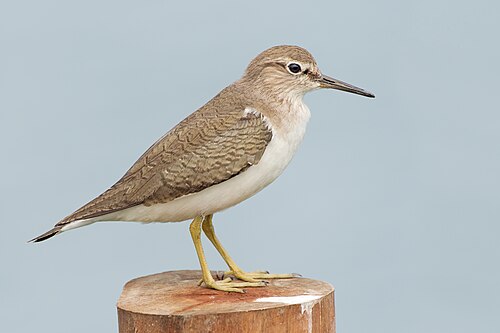
Common Sandpiper
Actitis hypoleucos

Dunlin
Calidris alpina

Common Snipe
Gallinago gallinago

Little Stint
Calidris minuta

Ruff
Calidris pugnax

Terek Sandpiper
Xenus cinereus
Global Distribution
Where this species is recorded worldwide. Restricted to human observations from 2019 onwards — the same kind of record and the same period the probabilities on this page are built from, so collar-tracking studies, camera-trap arrays and museum specimens are excluded. Around Santa Rosa that removes 5,924 GPS fixes from a handful of tagged jaguars.
where this species is recorded (GBIF density — it tracks where observers go, not how likely a sighting is) · parks where it occurs — tap a pin for the sighting probability there
Parks Where Found
Quick answers
What are the chances of seeing a Spotted Redshank in Camargue?
About 20% of wildlife watchers report a Spotted Redshank sighting in Camargue, based on 178 verified sightings from GBIF citizen-science data.
When is the best time to see Spotted Redshank in Camargue?
April has the highest sighting rate for Spotted Redshank in Camargue in our monthly data.