


Dunlin
Calidris alpina
- KingdomAnimalia (Animals)
- PhylumChordata (Chordates)
- ClassAves (Birds)
- OrderCharadriiformes (Shorebirds and Allies)
- FamilyScolopacidae (Sandpipers and Allies)
- GenusCalidris (Calidris Sandpipers)
- SpeciesCalidris alpina (Dunlin)
About the Dunlin
The dunlin (Calidris alpina) is a small wader in the genus Calidris. The English name is a dialect form of "dunling", first recorded in 1531–1532. It derives from dun, "dull brown", with the suffix -ling, meaning a person or thing with the given quality.
It is a circumpolar breeder in Arctic or subarctic regions. Birds that breed in western Europe are short-distance migrants largely staying on western and southern European and northwest African coasts; those breeding in far northern Europe and Asia are long-distance migrants, wintering south to Africa, southeast and west Asia. Birds that breed in Alaska and the Canadian Arctic migrate short distances to the Pacific and Atlantic coasts of North America, although those nesting in northern Alaska overwinter in Asia.
The dunlin was formally described by the Swedish naturalist Carl Linnaeus in 1758 in the tenth edition of his Systema Naturae under the binomial name Tringa alpina. Linnaeus specified the location as Lapland. This species was formerly placed (with the other "stints") by some American authors in the genus Erolia, but is now placed with 23 other sandpipers in the genus Calidris that was introduced in 1804 by the... Wikipedia →
Closest Relatives at Camargue

Little Stint
Calidris minuta

Ruff
Calidris pugnax

Sanderling
Calidris alba

Curlew Sandpiper
Calidris ferruginea

Red Knot
Calidris canutus

Temminck's Stint
Calidris temminckii

Broad-billed Sandpiper
Calidris falcinellus

Eurasian Curlew
Numenius arquata

Common Redshank
Tringa totanus

Common Greenshank
Tringa nebularia
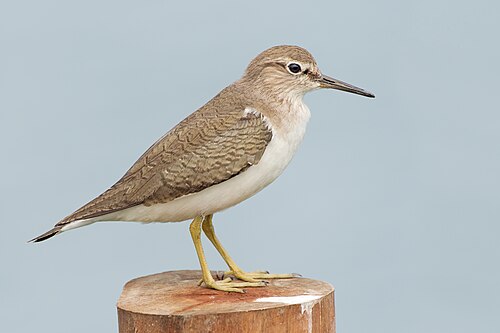
Common Sandpiper
Actitis hypoleucos

Green Sandpiper
Tringa ochropus
Global Distribution
Where this species is recorded worldwide. Restricted to human observations from 2019 onwards — the same kind of record and the same period the probabilities on this page are built from, so collar-tracking studies, camera-trap arrays and museum specimens are excluded. Around Santa Rosa that removes 5,924 GPS fixes from a handful of tagged jaguars.
where this species is recorded (GBIF density — it tracks where observers go, not how likely a sighting is) · parks where it occurs — tap a pin for the sighting probability there
Parks Where Found
Quick answers
What are the chances of seeing a Dunlin in Camargue?
About 20% of wildlife watchers report a Dunlin sighting in Camargue, based on 231 verified sightings from GBIF citizen-science data.
When is the best time to see Dunlin in Camargue?
January has the highest sighting rate for Dunlin in Camargue in our monthly data.