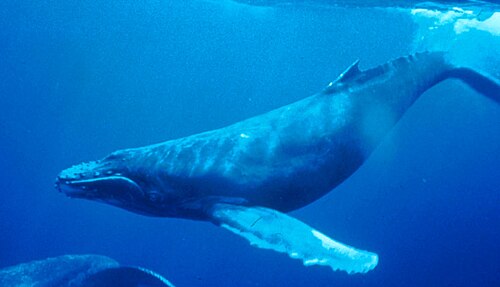



Humpback Whale
Megaptera novaeangliae
Silhouette: Chris huh · PhyloPic
- KingdomAnimalia (Animals)
- PhylumChordata (Chordates)
- ClassMammalia (Mammals)
- OrderCetacea
- FamilyBalaenopteridae (Rorquals)
- GenusMegaptera (Humpback Whales)
- SpeciesMegaptera novaeangliae (Humpback Whale)
About the Humpback Whale
The humpback whale (Megaptera novaeangliae) is a species of baleen whale. It is a rorqual (a member of the family Balaenopteridae) and is the only species in the genus Megaptera. Adults range in length from 14–17 m (46–56 ft) and weigh up to 40 metric tons (44 short tons). The humpback has a distinctive body shape, with long pectoral fins and tubercles on its head. It is known for breaching and other distinctive surface behaviors, making it popular with whale watchers. Males produce a complex song that typically lasts from 4 to 33 minutes.
Found in oceans and seas around the world, humpback whales typically migrate between feeding areas towards the poles and breeding areas near the equator. Their diet consists mostly of krill and small fish, and they usually use bubbles to catch prey. They are polygynandrous breeders, with both sexes having multiple partners. Males will follow females and fight off rivals. Mothers give birth to calves in shallower water. Orcas are the main natural predators of humpback whales. The bodies of humpbacks host barnacles and whale lice.
Like other large whales, the humpback was a target for the whaling industry. Humans once hunted the species to the brink of extinction: its population fell to around 5,000 by the 1960s. Numbers have partially recovered to some 135,000 animals worldwide, but entanglement in fishing gear, collisions with ships, and noise pollution continue to affect the species. Wikipedia →
Recent sightings of Humpback Whale in Great Bear Rainforest
LIVEiNaturalistClosest Relatives at Great Bear Rainforest

 Fin Whale
Balaenoptera physalus

 Minke Whale
Balaenoptera acutorostrata

 Killer Whale
Orcinus orca

 Dall's Porpoise
Phocoenoides dalli

 Common Porpoise
Phocoena phocoena

 Gray Whale
Eschrichtius robustus

 Risso's Dolphin
Grampus griseus

 Northern Right Whale Dolphin
Lissodelphis borealis

 Sperm Whale
Physeter macrocephalus

 Striped Dolphin
Stenella coeruleoalba
Global Distribution
Warmer areas are where this animal is recorded most often.
Parks Where Found
Quick answers
What are the chances of seeing a Humpback Whale in Great Bear Rainforest?
About 40% of wildlife watchers report a Humpback Whale sighting in Great Bear Rainforest, based on 698 verified sightings from GBIF citizen-science data.
When is the best time to see Humpback Whale in Great Bear Rainforest?
September has the highest sighting rate for Humpback Whale in Great Bear Rainforest in our monthly data.