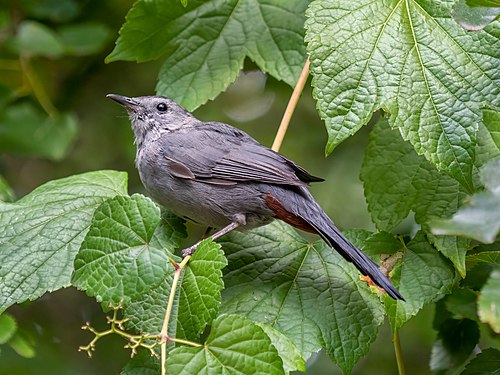



Gray Catbird
Dumetella carolinensis
Silhouette: Andy Wilson · PhyloPic
- KingdomAnimalia (Animals)
- PhylumChordata (Chordates)
- ClassAves (Birds)
- OrderPasseriformes (Perching Birds)
- FamilyMimidae (Mockingbirds and Thrashers)
- GenusDumetella
- SpeciesDumetella carolinensis (Gray Catbird)
About the Gray Catbird
The gray catbird (Dumetella carolinensis), also spelled grey catbird, is a medium-sized North American and Central American perching bird of the mimid family. It is the only member of the "catbird" genus Dumetella. Like the black catbird (Melanoptila glabrirostris), it is among the basal lineages of the Mimidae, probably a closer relative of the Caribbean thrasher and trembler assemblage than of the mockingbirds and Toxostoma thrashers. In some areas it is known as the slate-colored mockingbird.
The name Dumetella is based upon the Latin term dūmus ("thorny thicket"); it thus means approximately "small thornbush-dweller" or "small bird of the thornbushes". It refers to the species' habit of singing when hidden in undergrowth. The specific name carolinensis is Neo-Latin for "from the Carolinas".
The species was first described by Carl Linnaeus in his 1766 edition of Systema Naturae. His original name Muscicapa carolinensis reflected the belief, widespread at that time, that the gray catbird was some sort of Old World flycatcher (presumably due to its remarkably plain coloration, not similar to other mimids).
The genus name has a convoluted nomenclatorial history. The monotypic... Wikipedia →
Recent sightings of Gray Catbird in Great Smoky Mountains National Park
LIVEiNaturalistClosest Relatives at Great Smoky Mountains National Park

 Northern Mockingbird
Mimus polyglottos

 Brown Thrasher
Toxostoma rufum

 American Crow
Corvus brachyrhynchos

 Northern Cardinal
Cardinalis cardinalis

 Carolina Wren
Thryothorus ludovicianus

 Carolina Chickadee
Poecile carolinensis

 American Robin
Turdus migratorius

Tufted Titmouse
Baeolophus bicolor

 Blue Jay
Cyanocitta cristata

 Song Sparrow
Melospiza melodia

 American Goldfinch
Spinus tristis

 Eastern Phoebe
Sayornis phoebe
Global Distribution
Warmer areas are where this animal is recorded most often.
Parks Where Found
Quick answers
What are the chances of seeing a Gray Catbird in Great Smoky Mountains National Park?
About 20% of wildlife watchers report a Gray Catbird sighting in Great Smoky Mountains National Park, based on 1,872 verified sightings from GBIF citizen-science data.
When is the best time to see Gray Catbird in Great Smoky Mountains National Park?
September has the highest sighting rate for Gray Catbird in Great Smoky Mountains National Park in our monthly data.