


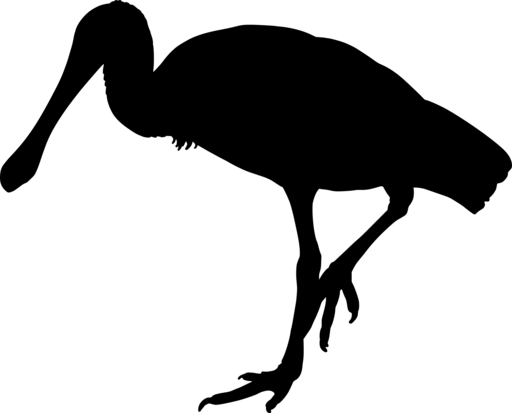
African Spoonbill
Platalea alba
Silhouette: Andy Wilson · PhyloPic
- KingdomAnimalia (Animals)
- PhylumChordata (Chordates)
- ClassAves (Birds)
- OrderPelecaniformes (Pelicans, Herons, Ibises, and Allies)
- FamilyThreskiornithidae (Ibises and Spoonbills)
- GenusPlatalea (Spoonbills)
- SpeciesPlatalea alba (African Spoonbill)
About the African Spoonbill
The African spoonbill (Platalea alba) is a long-legged wading bird of the ibis and spoonbill family Threskiornithidae. The species is widespread across Africa and Madagascar, including Botswana, Kenya, Mozambique, Namibia, South Africa, and Zimbabwe. The species belongs to the genus Platalea, which also includes species such as the Black-faced spoonbill, Eurasian spoonbill, and Roseate spoonbill.
The African spoonbill lives in marshy wetlands with some open shallow water and nests in colonies in trees or reedbeds. They usually don't share colonies with storks or herons. They feed by moving its flat bill side to side throughout shallow water, snapping up fish, molluscs, amphibians, crustaceans, and insects when detected. Long legs and thin, pointed toes enable it to walk easily through varying depths of water. Juveniles are born with shorter bills that gradually develop into the species' unique spoon-shaped form as they mature.
The African spoonbill is almost unmistakable through most of its range. The breeding bird is all white except for its red legs and face and long grey spatulate bill. It has no crest, unlike the common spoonbill. Immature birds lack the red face... Wikipedia →
Recent sightings of African Spoonbill in Hluhluwe-Imfolozi Park
LIVEiNaturalistClosest Relatives at Hluhluwe-Imfolozi Park

 Hadada
Bostrychia hagedash

 Glossy Ibis
Plegadis falcinellus

 African Sacred Ibis
Threskiornis aethiopicus

 Hamerkop
Scopus umbretta

 Cattle Egret
Bubulcus ibis

 Grey Heron
Ardea cinerea

 Little Egret
Egretta garzetta

 Striated Heron
Butorides striata

 Great Egret
Ardea alba

Black-headed Heron
Ardea melanocephala

intermediate egret
Egretta intermedia

 Black-crowned Night Heron
Nycticorax nycticorax
Global Distribution
Warmer areas are where this animal is recorded most often.