
Brambling
Fringilla montifringilla
- KingdomAnimalia (Animals)
- PhylumChordata (Chordates)
- ClassAves (Birds)
- OrderPasseriformes (Perching Birds)
- FamilyFringillidae (Finches, Euphonias, and Allies)
- GenusFringilla (Chaffinches and Brambling)
- SpeciesFringilla montifringilla (Brambling)
About the Brambling
The brambling (Fringilla montifringilla) is a small passerine bird in the finch family Fringillidae. It has also been called the cock o' the north and the mountain finch. It is widespread and migratory, often seen in very large flocks.
In 1758 Linnaeus included the species in the 10th edition of his Systema Naturae under its current binomial name, Fringilla montifringilla. Montifringilla is from Latin mons, montis mountain and fringilla finch. The English name "bramlyng" (Bram "loud" + lyng "lung") was used in 1544 by the English naturalist William Turner but later in the 16th century the current spelling "brambling" was used. The etymology of the name is uncertain as the bird is not associated with the bramble or common blackberry Rubus fruticosus.
The brambling is similar in size and shape to a common chaffinch. Breeding-plumaged male bramblings are very distinctive, with a black head, dark upperparts, orange breast and white belly. Females and younger birds are less distinct, and more similar in appearance to some chaffinches. In all plumages, however, bramblings differs from chaffinches in a number of features:
the brambling has a white rump... Wikipedia →
Closest Relatives at Hohe Tauern National Park

Chaffinch
Fringilla coelebs

Eurasian Goldfinch
Carduelis carduelis

Linnet
Linaria cannabina

Common Redpoll
Acanthis flammea

European Serin
Serinus serinus
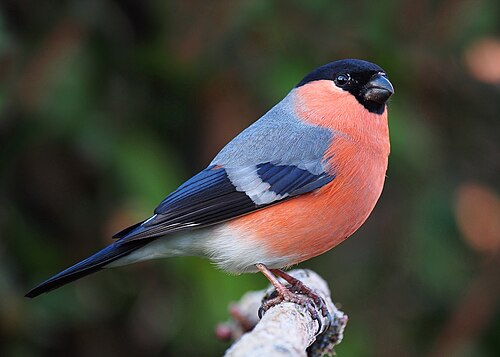
Eurasian Bullfinch
Pyrrhula pyrrhula

Red Crossbill
Loxia curvirostra

Eurasian Siskin
Spinus spinus

European Greenfinch
Chloris chloris

Hawfinch
Coccothraustes coccothraustes

Citril Finch
Carduelis citrinella

Black Redstart
Phoenicurus ochruros
Global Distribution
Where this species is recorded worldwide. Restricted to human observations from 2019 onwards — the same kind of record and the same period the probabilities on this page are built from, so collar-tracking studies, camera-trap arrays and museum specimens are excluded. Around Santa Rosa that removes 5,924 GPS fixes from a handful of tagged jaguars.
where this species is recorded (GBIF density — it tracks where observers go, not how likely a sighting is) · parks where it occurs — tap a pin for the sighting probability there