


Mourning Gecko
Lepidodactylus lugubris
Silhouette: PhyloPic · PhyloPic
- KingdomAnimalia (Animals)
- PhylumChordata (Chordates)
- ClassSquamata
- FamilyGekkonidae (Typical Geckos)
- GenusLepidodactylus (Scaly-toed Geckos)
- SpeciesLepidodactylus lugubris (Mourning Gecko)
About the Mourning Gecko
Lepidodactylus lugubris, known as the mourning gecko or common smooth-scaled gecko, is a species of lizard, a gecko of the family Gekkonidae. This species is widespread in coastal regions of the Indian and Pacific oceans, including the Maldives, Sri Lanka, India, Myanmar, Malaysia, Vietnam, Thailand, Cambodia, Japan, Taiwan, China, Indonesia, Singapore, Philippines, Papua New Guinea, Fiji, Australia (Cocos Island), Western Samoa, Guam, the Society Islands, Pitcairn, and the Mascarene Islands.
It has been introduced widely in the Neotropics, including in Mexico, Brazil, Guatemala, Honduras, El Salvador, Nicaragua, Costa Rica, Panama, Florida, The Bahamas, Guadeloupe, Ecuador (including the Galapagos), Colombia and Chile, as well as to Hawai'i and the Seychelles in the Indian Ocean.
Lepidodactylus lugubris measure 8.5–10 cm in length including tail (4–4.4 cm snout-to-vent). L. lugubris is cryptically coloured, typically light to dark tan with dark spots down the length of its back and a brown strip from the ear to the tip of the nose. This species is capable of changing color, and so the same individual may appear light or dark at different times during... Wikipedia →
Recent sightings of Mourning Gecko in Kinabalu Park
LIVEiNaturalistClosest Relatives at Kinabalu Park

 Sabah Scaly-toed Gecko
Lepidodactylus ranauensis

 Balu Bow-fingered Gecko
Cyrtodactylus baluensis

 Flat-tailed House Gecko
Hemidactylus platyurus

 Spotted House Gecko
Gekko monarchus

 Common House Gecko
Hemidactylus frenatus
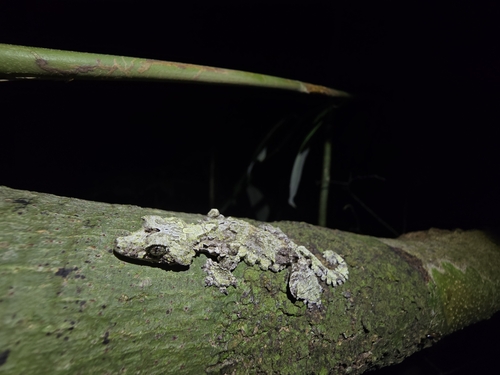
Sabah Flying Gecko
Gekko rhacophorus
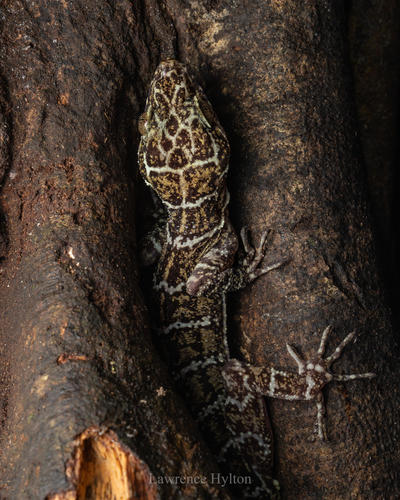
Borneo Bow-fingered Gecko
Cyrtodactylus malayanus

 Common Dwarf Gecko
Hemiphyllodactylus typus

 Mutilating Gecko
Gehyra mutilata

Tokay Gecko
Gekko gecko

 Gliding gecko
Gekko kuhli

Garnot's House Gecko
Hemidactylus garnotii
Global Distribution
Warmer areas are where this animal is recorded most often.