


Nutmeg Mannikin
Lonchura punctulata
Silhouette: Andy Wilson · PhyloPic
- KingdomAnimalia (Animals)
- PhylumChordata (Chordates)
- ClassAves (Birds)
- OrderPasseriformes (Perching Birds)
- FamilyEstrildidae (Waxbills and Allies)
- GenusLonchura (Typical Munias and Mannikins)
- SpeciesLonchura punctulata (Nutmeg Mannikin)
About the Nutmeg Mannikin
The scaly-breasted munia or spotted munia (Lonchura punctulata), known in the pet trade as nutmeg mannikin or spice finch, is a sparrow-sized estrildid finch native to tropical Asia. A species of the genus Lonchura, it was formally described and named by Carl Linnaeus in 1758. Its name is based on the distinct scale-like feather markings on the breast and belly. The adult is brown above and has a dark conical bill. The species has 11 subspecies across its range, which differ slightly in size and colour.
This munia eats mainly grass seeds apart from berries and small insects. They forage in flocks and communicate with soft calls and whistles. The species is highly social and may sometimes roost with other species of munias. This species is found in tropical plains and grasslands. Breeding pairs construct dome-shaped nests using grass or bamboo leaves.
The species is endemic to Asia and occurs from India and Sri Lanka east to Indonesia and the Philippines (where it is called mayang pakíng). It has been introduced into many other parts of the world, and feral populations have established in Puerto Rico and Hispaniola, as well as parts of Australia, and the United States of America, with sightings in California. The bird is listed as of least concern by the International Union for Conservation of Nature (IUCN). Wikipedia →
Recent sightings of Nutmeg Mannikin in Kinabatangan Wildlife Sanctuary
LIVEiNaturalistClosest Relatives at Kinabatangan Wildlife Sanctuary

 Dusky Munia
Lonchura fuscans

Chestnut Munia
Lonchura atricapilla

White-bellied Munia
Lonchura leucogastra

Java Sparrow
Lonchura oryzivora

 Red Avadavat
Amandava amandava

 Slender-billed Crow
Corvus enca

Black-and-red Broadbill
Cymbirhynchus macrorhynchos

 Javan Myna
Acridotheres javanicus

Ashy Tailorbird
Orthotomus ruficeps

 Malaysian Pied-Fantail
Rhipidura javanica

 White-crowned Shama
Copsychus stricklandii
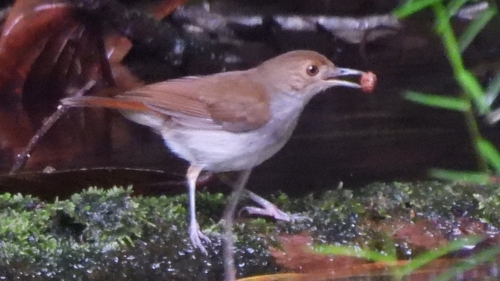
 White-chested Babbler
Trichastoma rostratum
Global Distribution
Warmer areas are where this animal is recorded most often.
Parks Where Found
Quick answers
What are the chances of seeing a Nutmeg Mannikin in Kinabatangan Wildlife Sanctuary?
Under 5% of wildlife watchers report a Nutmeg Mannikin sighting in Kinabatangan Wildlife Sanctuary, based on 5 verified sightings from GBIF citizen-science data.
When is the best time to see Nutmeg Mannikin in Kinabatangan Wildlife Sanctuary?
July has the highest sighting rate for Nutmeg Mannikin in Kinabatangan Wildlife Sanctuary in our monthly data.