


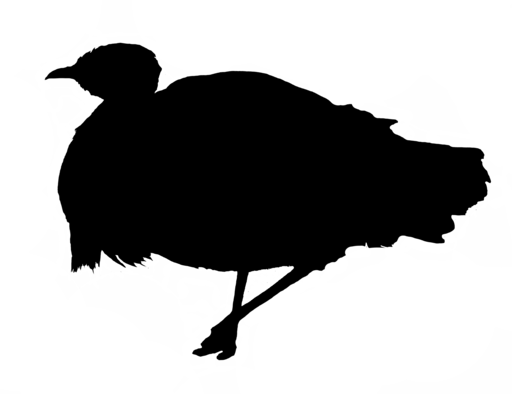
Black-bellied Bustard
Lissotis melanogaster
Silhouette: Kai Caspar · PhyloPic
- KingdomAnimalia (Animals)
- PhylumChordata (Chordates)
- ClassAves (Birds)
- OrderOtidiformes (Bustards)
- FamilyOtididae (Bustards)
- GenusLissotis (Black-bellied and Hartlaub's Bustards)
- SpeciesLissotis melanogaster (Black-bellied Bustard)
About the Black-bellied Bustard
The black-bellied bustard (Lissotis melanogaster), also known as the black-bellied korhaan, is an African ground-dwelling bird in the bustard family. The black-bellied bustard is 58–65 cm (23–26 in) long. The bill and legs are dull yellow. The male's upperparts have black and brown marks on a tawny buff background; the underparts are black. The head is boldly patterned with black, white and buff. The neck, long and thin for a bustard, is buffy brown with a thin black line down the front that joins the black breast. The tail is brown and buff with four or five narrow dark brown bands. The upper surface of the wings is white with a brown triangle at the base; the flight feathers have black tips except for the outer secondary feathers. The white of the wings is visible when the bird stands, contrasting with the black underparts.
The female is plain buff, cryptically marked with darker brown mottling on the back and vermiculation (narrow wavy bands) on the neck and breast. The juvenile is duller and darker, with a dark grey crown and buff spots on the wing. The neck and rump patterns of both sexes, the male's white chin and lores, and the female's vermiculations are... Wikipedia →
Recent sightings of Black-bellied Bustard in Kruger National Park
LIVEiNaturalistClosest Relatives at Kruger National Park


Global Distribution
Warmer areas are where this animal is recorded most often.
Parks Where Found
Quick answers
What are the chances of seeing a Black-bellied Bustard in Kruger National Park?
About 10% of wildlife watchers report a Black-bellied Bustard sighting in Kruger National Park, based on 592 verified sightings from GBIF citizen-science data.
When is the best time to see Black-bellied Bustard in Kruger National Park?
November has the highest sighting rate for Black-bellied Bustard in Kruger National Park in our monthly data.