
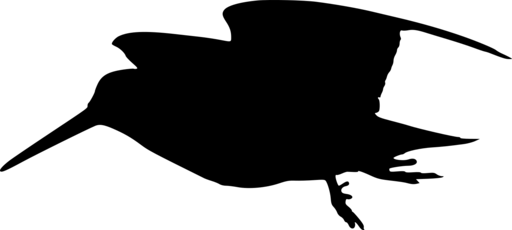
Eurasian Woodcock
Scolopax rusticola
Silhouette: Craig Nash · PhyloPic
- KingdomAnimalia (Animals)
- PhylumChordata (Chordates)
- ClassAves (Birds)
- OrderCharadriiformes (Shorebirds and Allies)
- FamilyScolopacidae (Sandpipers and Allies)
- GenusScolopax (Woodcocks)
- SpeciesScolopax rusticola (Eurasian Woodcock)
About the Eurasian Woodcock
The Eurasian woodcock (Scolopax rusticola) is a medium-small wading bird found in temperate and subarctic Eurasia. It has cryptic camouflage to suit its woodland habitat, with reddish-brown upperparts and buff-coloured underparts. Its eyes are set far back on its head to give it 360-degree vision and it probes in the ground for food with its long, sensitive bill, making it vulnerable to cold weather when the ground remains frozen.
The male performs a courtship flight known as "roding" at dusk in spring. It is widely believed that the female will sometimes carry chicks between her legs whilst flying, though evidence of this is purely anecdotal. The world population is estimated to be 14 million to 16 million birds.
The Eurasian woodcock was formally described by the Swedish naturalist Carl Linnaeus in 1758 in the tenth edition of his Systema Naturae under the current binomial name Scolopax rusticola. The genus name is Latin for a snipe or woodcock. The specific epithet rusticola is the Latin name of a gamebird mentioned by Pliny the Elder and Marcus Valerius Martialis. It was possibly a grouse. The species is monotypic: no subspecies are recognised. Its closest relatives... Wikipedia →
Recent sightings of Eurasian Woodcock in Mercantour National Park
LIVEiNaturalistClosest Relatives at Mercantour National Park

 Common Redshank
Tringa totanus

Wood Sandpiper
Tringa glareola

Common Greenshank
Tringa nebularia

Green Sandpiper
Tringa ochropus

 Common Sandpiper
Actitis hypoleucos

 Black-headed Gull
Chroicocephalus ridibundus

 Eurasian Dotterel
Charadrius morinellus

 Yellow-legged Gull
Larus michahellis

 Black-winged Stilt
Himantopus himantopus
Global Distribution
Warmer areas are where this animal is recorded most often.