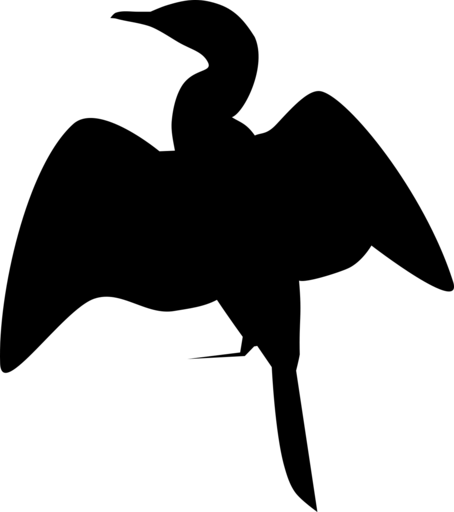
Long-tailed Cormorant

Long-tailed Cormorant

Microcarbo africanus

Silhouette: L. Shyamal · PhyloPic

Least ConcernNear ThreatenedVulnerableEndangeredCritically Endangered
Daily sighting probability ~30% · Possible
at Queen Elizabeth National Park
610 Verified sightings at Queen Elizabeth National Park From 2019 to 2026
12,459 Verified sightings across all 50 parks From 2019 to 2026
February Best month highest sighting rate
☀️ Diurnal When it's spotted during daytime hours (6am–6pm)

About the Long-tailed Cormorant

The reed cormorant (Microcarbo africanus), also known as the long-tailed cormorant, is a bird in the cormorant family Phalacrocoracidae. It breeds in much of Africa south of the Sahara, and Madagascar. It is resident but undertakes some seasonal movements.

The reed cormorant was formally described in 1789 by the German naturalist Johann Friedrich Gmelin in his revised and expanded edition of Carl Linnaeus's Systema Naturae. He placed it in the genus Pelecanus and coined the binomial name Pelecanus africanus. Gmelin based his description on the "African shag" that had been described in 1785 by the English ornithologist John Latham in his book A General Synopsis of Birds. The reed cormorant is now one of five small cormorants placed in the genus Microcarbo that was introduced in 1856 by the French naturalist Charles Lucien Bonaparte.

Two subspecies are recognised: M. a. africanus (Gmelin, JF, 1789) – inland and coastal Sub-Saharan Africa M. a. pictilis (Bangs, 1918) – Madagascar (mainly west) This is a small cormorant, 50–55 cm (20–22 in) in overall length with a wingspan of 80–90 cm (31–35 in). It is mainly black, glossed green, in the breeding season... Wikipedia →

Global Distribution

Warmer areas are where this animal is recorded most often.

Parks Where Found

# Park Country Daily sighting probability
1 Nairobi National Park 🇰🇪 Kenya
~60%
2 iSimangaliso Wetland Park 🇿🇦 South Africa
~50%
3 Pilanesberg National Park 🇿🇦 South Africa
~50%
4 Chobe National Park 🇧🇼 Botswana
~50%
5 Kafue National Park 🇿🇲 Zambia
~50%
6 Garden Route National Park 🇿🇦 South Africa
~40%
7 Murchison Falls National Park 🇺🇬 Uganda
~40%
8 Akagera National Park 🇷🇼 Rwanda
~40%
9 Lake Nakuru National Park 🇰🇪 Kenya
~40%
10 Queen Elizabeth National Park 🇺🇬 Uganda
~30%
11 Golden Gate Highlands National Park 🇿🇦 South Africa
~30%
12 Liwonde National Park 🇲🇼 Malawi
~30%
13 Arusha National Park 🇹🇿 Tanzania
~30%
14 Niokolo-Koba National Park 🇸🇳 Senegal
~30%
15 Moremi Game Reserve 🇧🇼 Botswana
~30%
16 Lower Zambezi National Park 🇿🇲 Zambia
~20%
17 Mana Pools National Park 🇿🇼 Zimbabwe
~20%
18 Kruger National Park 🇿🇦 South Africa
~20%
19 Amboseli National Park 🇰🇪 Kenya
~10%
20 Addo Elephant National Park 🇿🇦 South Africa
~10%
21 Ngorongoro Conservation Area 🇹🇿 Tanzania
~10%
22 Virunga National Park 🇨🇩 Democratic Republic of the Congo
~10%
23 Gonarezhou National Park 🇿🇼 Zimbabwe
~10%
24 Selous Game Reserve 🇹🇿 Tanzania
~10%
25 Table Mountain National Park 🇿🇦 South Africa
~10%
26 Lake Mburo National Park 🇺🇬 Uganda
~10%
27 Awash National Park 🇪🇹 Ethiopia
~10%
28 Tsavo West National Park 🇰🇪 Kenya
~10%
29 Mikumi National Park 🇹🇿 Tanzania
~10%
30 Semuliki National Park 🇺🇬 Uganda
<5%
31 Lake Manyara National Park 🇹🇿 Tanzania
<5%
32 Tarangire National Park 🇹🇿 Tanzania
<5%
33 Kibale National Park 🇺🇬 Uganda
<5%
34 Nyungwe National Park 🇷🇼 Rwanda
<5%
35 Hwange National Park 🇿🇼 Zimbabwe
<5%
36 Tsavo East National Park 🇰🇪 Kenya
<5%
37 Masai Mara National Reserve 🇰🇪 Kenya
<5%
38 Hluhluwe-Imfolozi Park 🇿🇦 South Africa
<5%
39 Ankarafantsika National Park 🇲🇬 Madagascar
<5%
40 Namib-Naukluft National Park 🇳🇦 Namibia
<5%
41 Aberdare National Park 🇰🇪 Kenya
<5%
42 Serengeti National Park 🇹🇿 Tanzania
<5%
43 Volcanoes National Park 🇷🇼 Rwanda
<5%
44 Meru National Park 🇰🇪 Kenya
Insufficient data
45 Ruaha National Park 🇹🇿 Tanzania
Insufficient data
46 Gorongosa National Park 🇲🇿 Mozambique
Insufficient data
47 Mkomazi National Park 🇹🇿 Tanzania
Insufficient data
48 South Luangwa National Park 🇿🇲 Zambia
Insufficient data
49 Samburu National Reserve 🇰🇪 Kenya
Insufficient data
50 Kidepo Valley National Park 🇺🇬 Uganda
Insufficient data

Quick answers

What are the chances of seeing a Long-tailed Cormorant in Queen Elizabeth National Park?

About 30% of wildlife watchers report a Long-tailed Cormorant sighting in Queen Elizabeth National Park, based on 610 verified sightings from GBIF citizen-science data.

When is the best time to see Long-tailed Cormorant in Queen Elizabeth National Park?

February has the highest sighting rate for Long-tailed Cormorant in Queen Elizabeth National Park in our monthly data.

← Back to Queen Elizabeth National Park