



Rock Martin
Ptyonoprogne fuligula
Silhouette: Sheatherius · PhyloPic
- KingdomAnimalia (Animals)
- PhylumChordata (Chordates)
- ClassAves (Birds)
- OrderPasseriformes (Perching Birds)
- FamilyHirundinidae (Swallows and Martins)
- GenusPtyonoprogne (Crag-Martins)
- SpeciesPtyonoprogne fuligula (Rock Martin)
About the Rock Martin
The large rock martin (Ptyonoprogne fuligula), also known as the southern crag-martin, is a small passerine bird in the swallow family that is resident in southern Africa. It was formerly considered to be conspecific with the red-throated rock martin. It breeds mainly in the mountains, but also at lower altitudes, especially in rocky areas and around towns, and, unlike most swallows, it is often found far from water. It is 12–15 cm (4.7–5.9 in) long, with mainly brown plumage, paler-toned on the upper breast and underwing coverts, and with white "windows" on the spread tail in flight. The sexes are similar in appearance, but juveniles have pale fringes to the upperparts and flight feathers. The former northern subspecies are smaller, paler, and whiter-throated than southern African forms, and are now usually split as a separate species, the pale crag martin. The large rock martin hunts along cliff faces for flying insects using a slow flight with much gliding. Its call is a soft twitter.
The large rock martin builds a deep bowl nest on a sheltered horizontal surface, or a neat quarter-sphere against a vertical rock face or wall. The nest is constructed with mud pellets and lined with grass or feathers, and may be built on natural sites under cliff overhangs or on man-made structures such as buildings, dam walls, culverts and bridges. It is often reused for subsequent broods or in later years. The large rock martin is a solitary breeder, and is not gregarious, but small groups may breed close together in suitable locations. The two or three eggs of a typical clutch are white with brown and grey blotches, and are incubated by both adults for 16–19 days prior to hatching. Both parents then feed the chicks. Fledging takes another 22–24 days, but the young birds will return to the nest to roost for a few days after the first flight.
The large rock martin is often predated on by several fast and agile species of falcon, such as the hobby, and it sometimes carries parasites. Because it is common within its large range with an apparently stable population, it is assessed as a least-concern species on the IUCN Red List. Wikipedia →
Recent sightings of Rock Martin in Serengeti National Park
LIVEiNaturalistClosest Relatives at Serengeti National Park

 Barn Swallow
Hirundo rustica

Wire-tailed Swallow
Hirundo smithii
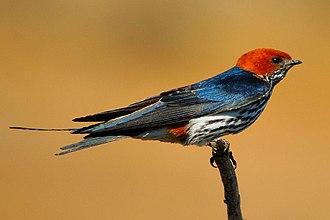
 Lesser Striped-Swallow
Cecropis abyssinica

 Plain Martin
Riparia paludicola

 White-headed Sawwing
Psalidoprocne albiceps

Mosque Swallow
Cecropis senegalensis

Banded Martin
Riparia cincta

Black Sawwing
Psalidoprocne pristoptera

Angola Swallow
Hirundo angolensis

Rufous-chested Swallow
Cecropis semirufa

 Bank Swallow
Riparia riparia

 House Martin
Delichon urbicum
Global Distribution
Warmer areas are where this animal is recorded most often.
Parks Where Found
Quick answers
What are the chances of seeing a Rock Martin in Serengeti National Park?
About 10% of wildlife watchers report a Rock Martin sighting in Serengeti National Park, based on 631 verified sightings from GBIF citizen-science data.
When is the best time to see Rock Martin in Serengeti National Park?
March has the highest sighting rate for Rock Martin in Serengeti National Park in our monthly data.