

Banded Martin
Riparia cincta
Silhouette: Andy Wilson · PhyloPic
- KingdomAnimalia (Animals)
- PhylumChordata (Chordates)
- ClassAves (Birds)
- OrderPasseriformes (Perching Birds)
- FamilyHirundinidae (Swallows and Martins)
- GenusRiparia (Sand Martins, Plain Martins, and Allies)
- SpeciesRiparia cincta (Banded Martin)
About the Banded Martin
The banded martin or banded sand martin (Neophedina cincta) is a small passerine bird in the swallow family Hirundinidae that is endemic to Africa. It is the only species placed in the genus Neophedina. The banded martin was described by the French polymath Georges-Louis Leclerc, Comte de Buffon in 1780 in his Histoire Naturelle des Oiseaux from a specimen collected from the Cape of Good Hope. The bird was also illustrated in a hand-coloured plate engraved by François-Nicolas Martinet in the Planches Enluminées D'Histoire Naturelle which was produced under the supervision of Edme-Louis Daubenton to accompany Buffon's text. Neither the plate caption nor Buffon's description included a scientific name but in 1783 the Dutch naturalist Pieter Boddaert coined the binomial name Hirundo cincta in his catalogue of the Planches Enluminées.
The banded martin was formerly placed in the genus Riparia. A genetic study found that it belonged to a different clade to other members of the genus, and it was moved to the genus Neophedina that had been introduced in 1922 by the South African zoologist Austin Roberts. The specific epithet cincta is from Latin cinctus meaning "banded".
Five... Wikipedia →
Recent sightings of Banded Martin in Serengeti National Park
LIVEiNaturalistClosest Relatives at Serengeti National Park

 Plain Martin
Riparia paludicola

 Bank Swallow
Riparia riparia

 Barn Swallow
Hirundo rustica

Wire-tailed Swallow
Hirundo smithii
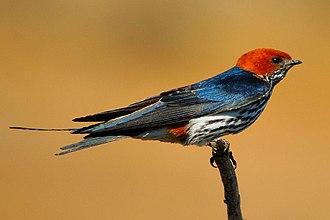
 Lesser Striped-Swallow
Cecropis abyssinica

 Rock Martin
Ptyonoprogne fuligula

White-headed Sawwing
Psalidoprocne albiceps

Mosque Swallow
Cecropis senegalensis

Black Sawwing
Psalidoprocne pristoptera

Angola Swallow
Hirundo angolensis

Rufous-chested Swallow
Cecropis semirufa

 House Martin
Delichon urbicum
Global Distribution
Warmer areas are where this animal is recorded most often.
Parks Where Found
Quick answers
What are the chances of seeing a Banded Martin in Serengeti National Park?
About 10% of wildlife watchers report a Banded Martin sighting in Serengeti National Park, based on 284 verified sightings from GBIF citizen-science data.
When is the best time to see Banded Martin in Serengeti National Park?
August has the highest sighting rate for Banded Martin in Serengeti National Park in our monthly data.