


Vervet Monkey
Chlorocebus pygerythrus
- KingdomAnimalia (Animals)
- PhylumChordata (Cordats)
- ClassMammalia (Mamífers)
- OrderPrimates
- FamilyCercopithecidae (Old World Monkeys)
- GenusChlorocebus (Savannah Monkeys)
- SpeciesChlorocebus pygerythrus (Vervet Monkey)
The vervet monkey (Chlorocebus pygerythrus), or simply vervet, is an Old World monkey of the family Cercopithecidae native to Africa. The term "vervet" is also used to refer to all the members of the genus Chlorocebus. The five distinct subspecies can be found mostly throughout Southern Africa, as well as some of the eastern countries. These mostly herbivorous monkeys have black faces and grey body hair color, ranging in body length from about 40 cm (16 in) for females, to about 50 cm (20 in) for males. In addition to behavioral research on natural populations, vervet monkeys serve as a nonhuman primate model for understanding genetic and social behaviors of humans. They have been noted for having human-like characteristics, such as hypertension, anxiety, and social and dependent alcohol use. Wikipedia →
Closest Relatives at Virunga National Park

Tantalus Monkey
Chlorocebus tantalus

Blue Monkey
Cercopithecus mitis

L'Hoest's Guenon
Allochrocebus lhoesti
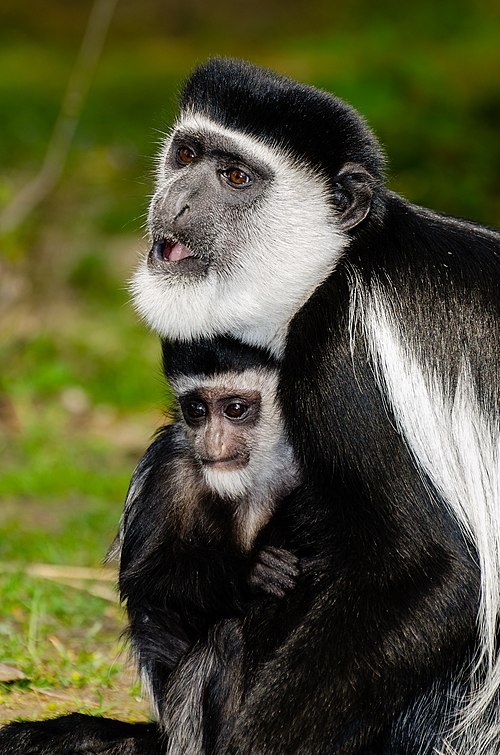
Mantled Guereza
Colobus guereza

Olive Baboon
Papio anubis

Red-tailed Monkey
Cercopithecus ascanius

Angola Colobus
Colobus angolensis

Eastern Gorilla
Gorilla beringei

Chimpanzee
Pan troglodytes

Spectacled Lesser Galago
Galago matschiei

Demidoff's Dwarf Galago
Galagoides demidoff

Thomas's Dwarf Galago
Galagoides thomasi
📅 Monthly Probability
Fewer than 5 records of Vervet Monkey at Virunga National Park — not enough to chart months honestly.
☀️ When They're Spotted
Most active during daytime hours (6am–6pm) · across all parks (global)
Global Distribution
Where this species is recorded worldwide. Restricted to human observations from 2019 onwards — the same kind of record and the same period the probabilities on this page are built from, so collar-tracking studies, camera-trap arrays and museum specimens are excluded. Around Santa Rosa that removes 5,924 GPS fixes from a handful of tagged jaguars.
where this species is recorded (GBIF density — it tracks where observers go, not how likely a sighting is) · parks where it occurs — tap a pin for the sighting probability there