



Black Sawwing
Psalidoprocne pristoptera
Silhouette: Sheatherius · PhyloPic
- KingdomAnimalia (Animals)
- PhylumChordata (Chordates)
- ClassAves (Birds)
- OrderPasseriformes (Perching Birds)
- FamilyHirundinidae (Swallows and Martins)
- GenusPsalidoprocne (Sawwings)
- SpeciesPsalidoprocne pristoptera (Black Sawwing)
About the Black Sawwing
The black saw-wing (Psalidoprocne pristoptera), also known as the blue saw-wing or black rough-winged swallow, is a small passerine bird in the swallow family. The black rough-winged swallow breeds in open wooded habitats, and has a preference for wetter areas, although some races occur in mountain grassland habitat. It breeds across Africa from eastern Nigeria and Ethiopia south to Angola, northern Zimbabwe and northern Mozambique. The subspecies P. p. holomelaena breeds down south-eastern Africa from southern Mozambique to the Cape in South Africa.
This species is mainly resident, apart from seasonal local or altitudinal movements, but P. p. holomelaena is migratory, spending the southern winter north of the breeding range. The nominate race P. p. pristoptera of the mountains of northern Ethiopia moves south after breeding.
The black rough-winged swallow is a small swallow at 13–15 cm length with a forked tail. Its plumage is blue-glossed black. Sexes are similar, but the female has shorter outer tail feathers, and less obvious wing serrations. Juveniles are brown with little gloss, and have short tails.
There are many subspecies of... Wikipedia →
Recent sightings of Black Sawwing in Volcanoes National Park
LIVEiNaturalistClosest Relatives at Volcanoes National Park

 White-headed Sawwing
Psalidoprocne albiceps

 Angola Swallow
Hirundo angolensis

Rock Martin
Ptyonoprogne fuligula

Barn Swallow
Hirundo rustica

 Plain Martin
Riparia paludicola
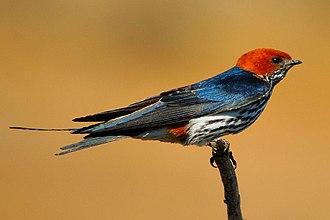
 Lesser Striped-Swallow
Cecropis abyssinica

Mosque Swallow
Cecropis senegalensis

 Bank Swallow
Riparia riparia

Wire-tailed Swallow
Hirundo smithii

Banded Martin
Riparia cincta

Streaky Seedeater
Crithagra striolata

Chubb's Cisticola
Cisticola chubbi
Global Distribution
Warmer areas are where this animal is recorded most often.
Parks Where Found
Quick answers
What are the chances of seeing a Black Sawwing in Volcanoes National Park?
About 40% of wildlife watchers report a Black Sawwing sighting in Volcanoes National Park, based on 327 verified sightings from GBIF citizen-science data.
When is the best time to see Black Sawwing in Volcanoes National Park?
December has the highest sighting rate for Black Sawwing in Volcanoes National Park in our monthly data.