


Fer-de-lance
Bothrops asper
Silhouette: Steven Traver · PhyloPic
- KingdomAnimalia (Animals)
- PhylumChordata (Chordates)
- ClassSquamata
- FamilyViperidae (Vipers)
- GenusBothrops (Neotropical Lanceheads)
- SpeciesBothrops asper (Fer-de-lance)
About the Fer-de-lance
The terciopelo (Bothrops asper), is a species of pit vipers, found from north-east Mexico to northern South America. At low to moderate elevations, its habitat ranges from northeastern Mexico to Colombian and Ecuadorian Andes, as well as Venezuela. With a mass of up to 6 kilograms (13 lb), and a maximal length of 2.5 metres (8.2 ft), the terciopelo is among the largest vipers. It is light to dark brown in color, often with yellowish, zig-zag patterning on either side of its body. Dubbed "the ultimate pit-viper" for its defensiveness, large size, fangs and potent venom yield, it has a fearsome reputation, responsible for the most envenomated snakebites within its range, largely due to its proximity to humans, livestock and pets. Nonetheless, like all venomous snakes, the terciopelo actively avoids contact with humans and other larger animals, with bites generally only occurring when the snake is cornered, pursued, or threatened. No subspecies are currently recognized.
The generic name, Bothrops, comes from the Greek words bothros and ops, which mean 'pit' and 'face' (or 'eye'), respectively. This is a reference to these snakes' highly sensitive heat-detecting pit organs... Wikipedia →
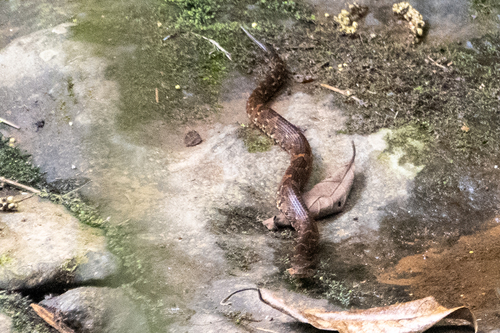
Recent sightings of Fer-de-lance in Braulio Carrillo National Park
LIVEiNaturalistClosest Relatives at Braulio Carrillo National Park



Global Distribution
Warmer areas are where this animal is recorded most often.
Parks Where Found
Quick answers
What are the chances of seeing a Fer-de-lance in Braulio Carrillo National Park?
About 50% of wildlife watchers report a Fer-de-lance sighting in Braulio Carrillo National Park, based on 195 verified sightings from GBIF citizen-science data.
When is the best time to see Fer-de-lance in Braulio Carrillo National Park?
March has the highest sighting rate for Fer-de-lance in Braulio Carrillo National Park in our monthly data.