
Red Knot
Calidris canutus
- KingdomAnimalia (Animals)
- PhylumChordata (Chordates)
- ClassAves (Birds)
- OrderCharadriiformes (Shorebirds and Allies)
- FamilyScolopacidae (Sandpipers and Allies)
- GenusCalidris (Calidris Sandpipers)
- SpeciesCalidris canutus (Red Knot)
About the Red Knot
The red knot or just knot (Calidris canutus) is a medium-sized shorebird which breeds in tundra and the Arctic Cordillera in the far north of Canada, Europe, and Russia. It is the type species of the genus Calidris. Six subspecies are recognised.
Their diet varies according to season; arthropods and larvae are the preferred food items at the breeding grounds, while various hard-shelled molluscs are consumed at other feeding sites at other times. North American breeders migrate to coastal areas in Europe and South America, while the Eurasian populations winter in Africa, Papua New Guinea, Australia, and New Zealand. This species forms enormous flocks when not breeding.
The red knot was first described by Carl Linnaeus in his landmark 1758 10th edition of Systema Naturae as Tringa canutus. The red knot and the great knot were originally the only two species placed in the genus Calidris, but many other species of sandpiper were subsequently added. A 2004 study found that the genus was polyphyletic and that the closest relative of the two knot species is the surfbird (Calidris virgata).
There are six subspecies, in order of size: C. c. roselaari... Wikipedia →
Closest Relatives at Camargue

Dunlin
Calidris alpina

Little Stint
Calidris minuta

Ruff
Calidris pugnax

Sanderling
Calidris alba

Curlew Sandpiper
Calidris ferruginea

Temminck's Stint
Calidris temminckii

Broad-billed Sandpiper
Calidris falcinellus

Eurasian Curlew
Numenius arquata

Common Redshank
Tringa totanus

Common Greenshank
Tringa nebularia
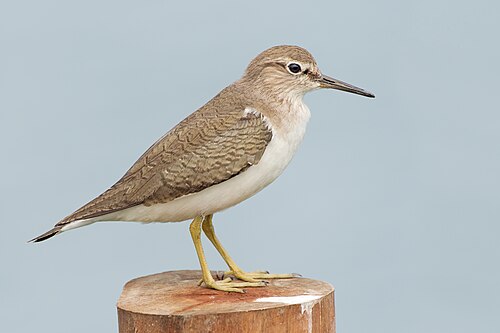
Common Sandpiper
Actitis hypoleucos

Green Sandpiper
Tringa ochropus
Global Distribution
Where this species is recorded worldwide. Restricted to human observations from 2019 onwards — the same kind of record and the same period the probabilities on this page are built from, so collar-tracking studies, camera-trap arrays and museum specimens are excluded. Around Santa Rosa that removes 5,924 GPS fixes from a handful of tagged jaguars.
where this species is recorded (GBIF density — it tracks where observers go, not how likely a sighting is) · parks where it occurs — tap a pin for the sighting probability there
Parks Where Found
Quick answers
What are the chances of seeing a Red Knot in Camargue?
Under 5% of wildlife watchers report a Red Knot sighting in Camargue, based on 27 verified sightings from GBIF citizen-science data.
When is the best time to see Red Knot in Camargue?
August has the highest sighting rate for Red Knot in Camargue in our monthly data.