


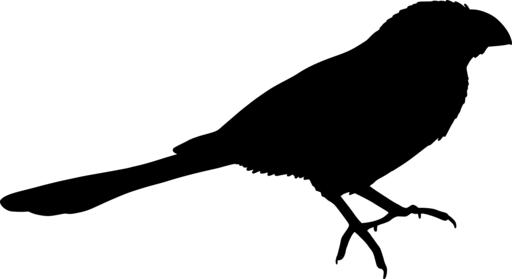
Greater Ani
Crotophaga major
Silhouette: Andy Wilson · PhyloPic
- KingdomAnimalia (Animals)
- PhylumChordata (Chordates)
- ClassAves (Birds)
- OrderCuculiformes (Cuckoos)
- FamilyCuculidae (Cuckoos)
- GenusCrotophaga (Anis)
- SpeciesCrotophaga major (Greater Ani)
About the Greater Ani
The greater ani (Crotophaga major) is a bird in the cuckoo family. It is sometimes referred to as the black cuckoo. It is found through tropical South America south to northern Argentina. In 1760 the French zoologist Mathurin Jacques Brisson included a description and an illustration of the greater ani in his Ornithologie based on a specimen collected in Cayenne, French Guiana. He used the French name Le grand Bout-de-Petun and the Latin name Crotophagus Major. Although Brisson coined Latin names, these do not conform to the binomial system and are not recognised by the International Commission on Zoological Nomenclature. The greater ani was also described and illustrated in 1779 by the French polymath Georges-Louis Leclerc, Comte de Buffon in his Histoire Naturelle des Oiseaux.
When in 1788 the German naturalist Johann Friedrich Gmelin revised and expanded Carl Linnaeus's Systema Naturae, he included the greater ani. He placed it with the smooth-billed ani in the genus Crotophaga, coined the binomial name Crotophaga major and cited the earlier authors. Gmelin specified the type locality as Cayenne. The genus name combines the Ancient Greek krotōn meaning "tick" with... Wikipedia →
Recent sightings of Greater Ani in Caroni Swamp
LIVEiNaturalist


Global Distribution
Warmer areas are where this animal is recorded most often.
Parks Where Found
Quick answers
What are the chances of seeing a Greater Ani in Caroni Swamp?
About 20% of wildlife watchers report a Greater Ani sighting in Caroni Swamp, based on 118 verified sightings from GBIF citizen-science data.
When is the best time to see Greater Ani in Caroni Swamp?
June has the highest sighting rate for Greater Ani in Caroni Swamp in our monthly data.