


Redwing
Turdus iliacus
- KingdomAnimalia (Animals)
- PhylumChordata (Chordates)
- ClassAves (Birds)
- OrderPasseriformes (Perching Birds)
- FamilyTurdidae (Thrushes)
- GenusTurdus (Typical Thrushes)
- SpeciesTurdus iliacus (Redwing)
About the Redwing
The redwing (Turdus iliacus) is a bird in the thrush family, Turdidae, native to Europe and the Palearctic, slightly smaller than the related song thrush. This species was first described by Carl Linnaeus in his 1758 10th edition of Systema Naturae under its current scientific name.
The English name derives from the bird's red underwing. It is not closely related to the red-winged blackbird, a North American species sometimes nicknamed "redwing", which is an icterid, not a thrush. The binomial name derives from the Latin words turdus, "thrush", and ile "flank".
About 65 species of medium to large thrushes are in the genus Turdus, characterised by rounded heads, longish, pointed wings, and usually melodious songs. Although two European thrushes, the song thrush and mistle thrush, are early offshoots from the Eurasian lineage of Turdus thrushes after they spread north from Africa, the redwing is descended from ancestors that had colonised the Caribbean islands from Africa and subsequently reached Europe from there.
The redwing has two subspecies: Turdus iliacus iliacus, the nominate subspecies described by Linnaeus, which breeds in mainland Eurasia. Turdus... Wikipedia →
Closest Relatives at Ecrins National Park

Eurasian Blackbird
Turdus merula

Mistle Thrush
Turdus viscivorus

Fieldfare
Turdus pilaris

Song Thrush
Turdus philomelos

Ring Ouzel
Turdus torquatus

Chaffinch
Fringilla coelebs

Coal Tit
Periparus ater

Eurasian Goldfinch
Carduelis carduelis

Blackcap
Sylvia atricapilla

European Robin
Erithacus rubecula
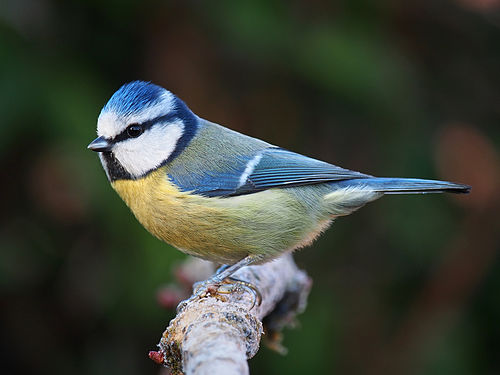
Blue Tit
Cyanistes caeruleus

Great Tit
Parus major
Global Distribution
Where this species is recorded worldwide. Restricted to human observations from 2019 onwards — the same kind of record and the same period the probabilities on this page are built from, so collar-tracking studies, camera-trap arrays and museum specimens are excluded. Around Santa Rosa that removes 5,924 GPS fixes from a handful of tagged jaguars.
where this species is recorded (GBIF density — it tracks where observers go, not how likely a sighting is) · parks where it occurs — tap a pin for the sighting probability there