


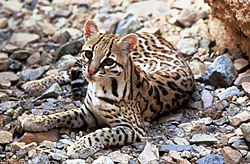


Ocelot
Leopardus pardalis
Silhouette: Margot Michaud · PhyloPic
- KingdomAnimalia (Animals)
- PhylumChordata (Chordates)
- ClassMammalia (Mammals)
- OrderCarnivora (Carnivorans)
- FamilyFelidae (Felids)
- GenusLeopardus (American Small Cats)
- SpeciesLeopardus pardalis (Ocelot)
About the Ocelot
The ocelot (Leopardus pardalis) is a medium-sized spotted wild cat that reaches 40–50 cm (16–20 in) at the shoulders and weighs between 7 and 15.5 kg (15 and 34 lb) on average. It is native to the southwestern United States, Mexico, Central and South America, and the Caribbean islands of Trinidad and Margarita. Carl Linnaeus scientifically described it in 1758. Two subspecies are recognized.
The ocelot is efficient at climbing, leaping and swimming. It prefers areas close to water sources with dense vegetation cover and high prey availability. It preys on small terrestrial mammals, such as armadilloes, opossums, and lagomorphs. It is typically active during twilight and at night and tends to be solitary and territorial. Both sexes become sexually mature at around two years of age and can breed throughout the year; peak mating season varies geographically. After a gestation period of two to three months, the female gives birth to a litter of one to three kittens. They stay with their mother for up to two years, after which they leave to establish their own home ranges.
The ocelot is listed as Least Concern on the IUCN Red List and is threatened by habitat destruction, hunting, and traffic accidents. While its range is very large, various populations are decreasing in many parts of its range. The association of the ocelot with humans dates back to the Aztec and Incan civilizations; it has occasionally been kept as a pet. Wikipedia →
Recent sightings of Ocelot in Manu National Park
LIVEiNaturalistClosest Relatives at Manu National Park

 Margay
Leopardus wiedii

 Jaguar
Panthera onca

 Mountain Lion
Puma concolor

Jaguarundi
Puma yagouaroundi

 Giant Otter
Pteronura brasiliensis

 Tayra
Tayra
Eira barbara

 South American Coati
Nasua nasua

 Andean Bear
Tremarctos ornatus

 Kinkajou
Potos flavus

 Beddard's Olingo
Bassaricyon alleni

 Neotropical Otter
Lontra longicaudis
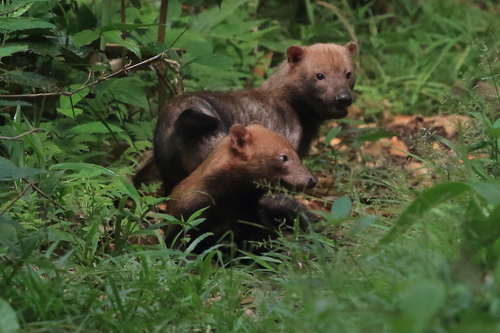
 Bush Dog
Speothos venaticus
Global Distribution
Warmer areas are where this animal is recorded most often.
Parks Where Found
Quick answers
What are the chances of seeing a Ocelot in Manu National Park?
About 10% of wildlife watchers report a Ocelot sighting in Manu National Park, based on 14 verified sightings from GBIF citizen-science data.
When is the best time to see Ocelot in Manu National Park?
January has the highest sighting rate for Ocelot in Manu National Park in our monthly data.