



Grosbeak Weaver
Amblyospiza albifrons
Silhouette: Sheatherius · PhyloPic
- KingdomAnimalia (Animals)
- PhylumChordata (Chordates)
- ClassAves (Birds)
- OrderPasseriformes (Perching Birds)
- FamilyPloceidae (Weavers and Allies)
- GenusAmblyospiza (Grosbeak Weavers)
- SpeciesAmblyospiza albifrons (Grosbeak Weaver)
About the Grosbeak Weaver
The thick-billed weaver (Amblyospiza albifrons), or grosbeak weaver, is a distinctive and bold species of weaver bird that is native to the Afrotropics. It belongs to the monotypic genus Amblyospiza and subfamily Amblyospizinae.
They have particularly strong mandibles, which are employed to extricate the seeds in nutlets and drupes, and their songs are comparatively unmusical and harsh. Their colonial nests are readily distinguishable from those of other weavers, due to their form and placement, and the fine strands used in their construction.
They habitually fan and flick their tails. The generic name Amblyospiza was coined by Carl Jakob Sundevall in 1850 and means "blunt, finch", referencing the very large bill, while the specific name albifrons refers white forehead of the males. The thick-billed weaver was formally described as Pyrrhula albifrons in 1831 by the Irish zoologist and politician Nicholas Aylward Vigors from the collection of Henry Ellis, the specimens of which were attributed to Algoa Bay and environs in the Eastern Cape.
Ten subspecies are currently recognized: A. a. capitalba (Bonaparte, 1850) – discontinuously from... Wikipedia →
Recent sightings of Grosbeak Weaver in Queen Elizabeth National Park
LIVEiNaturalistClosest Relatives at Queen Elizabeth National Park

 Black-headed Weaver
Ploceus melanocephalus
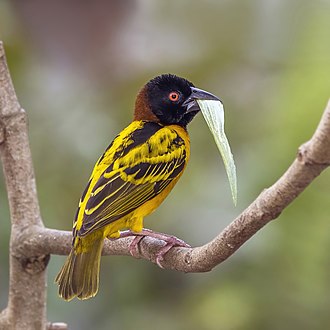
Village Weaver
Ploceus cucullatus

Red-billed Quelea
Quelea quelea

Slender-billed Weaver
Ploceus pelzelni

Red Bishop
Euplectes orix

Lesser Masked-Weaver
Ploceus intermedius

Fan-tailed Widowbird
Euplectes axillaris

Vieillot's Weaver
Ploceus nigerrimus

Spectacled Weaver
Ploceus ocularis

White-winged Widowbird
Euplectes albonotatus

Holub's Golden-Weaver
Ploceus xanthops

Red-collared Widowbird
Euplectes ardens
Global Distribution
Warmer areas are where this animal is recorded most often.
Parks Where Found
Quick answers
What are the chances of seeing a Grosbeak Weaver in Queen Elizabeth National Park?
About 10% of wildlife watchers report a Grosbeak Weaver sighting in Queen Elizabeth National Park, based on 89 verified sightings from GBIF citizen-science data.
When is the best time to see Grosbeak Weaver in Queen Elizabeth National Park?
May has the highest sighting rate for Grosbeak Weaver in Queen Elizabeth National Park in our monthly data.