
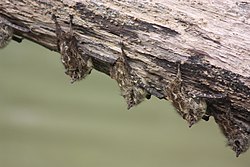



Proboscis Bat
Rhynchonycteris naso
Silhouette: Roberto Díaz Sibaja · PhyloPic
- KingdomAnimalia (Animals)
- PhylumChordata (Chordates)
- ClassMammalia (Mammals)
- OrderChiroptera (Bats)
- FamilyEmballonuridae (Sheath-tailed Bats)
- GenusRhynchonycteris
- SpeciesRhynchonycteris naso (Proboscis Bat)
About the Proboscis Bat
The proboscis bat (Rhynchonycteris naso) is a species of bat found in South America and Central America. Other common names include long-nosed proboscis bat, sharp-nosed bat, Brazilian long-nosed bat, and river bat. It is the only species in the genus Rhynchonycteris.
This species is in the family Emballonuridae, the sac-winged or sheath-tailed bats. Like most bats, it is nocturnal. It is found from southern Mexico to Belize, Peru, Venezuela, Bolivia and Brazil, as well as in Trinidad.
This is a small bat, with a head-and-body length of 37–43 mm (1.5–1.7 in), a tail length of around 12 mm (0.47 in), and a forearm length of 35–41 mm (1.4–1.6 in). A sample of males and females from Trinidad found weights ranging between 2.1–4.3 g (0.074–0.152 oz). Males in northern South America were found to average 56 millimetres (2.2 in) long, females 59 millimetres (2.3 in). The tail is about 16 millimetres (0.63 in) long. Pregnant females can weigh up to 6 grams (0.21 oz).
This species is found in the lowlands of the northern half of South America, throughout Central America, and into southeastern Mexico. From Ecuador south, it is limited to east of the Andes... Wikipedia →
Recent sightings of Proboscis Bat in Soberanía National Park
LIVEiNaturalistClosest Relatives at Soberanía National Park

 Greater Sac-winged Bat
Saccopteryx bilineata

Thomas's Shaggy Bat
Centronycteris centralis
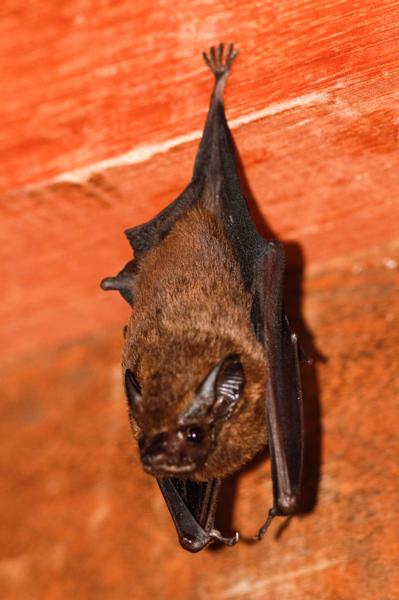
Chestnut Sac-winged Bat
Cormura brevirostris

 Common tent-making Bat
Uroderma bilobatum

 Jamaican Fruit-eating Bat
Artibeus jamaicensis

 fringe-lipped bat
Trachops cirrhosus

Seba's Short-tailed Bat
Carollia perspicillata
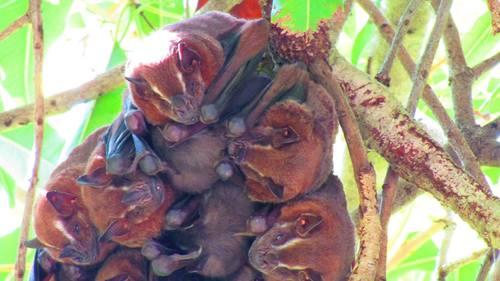
Great Fruit-eating Bat
Artibeus lituratus

Greater Spear-nosed Bat
Phyllostomus hastatus

Common Big-eared Bat
Micronycteris microtis
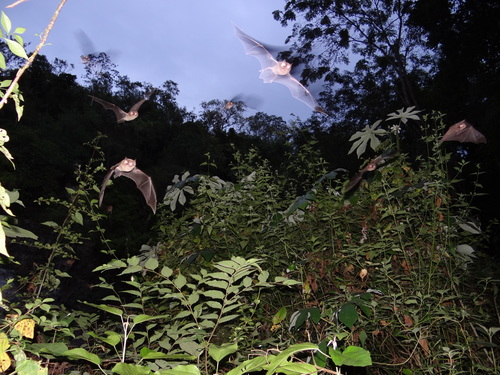
Mesoamerican Common Mustached Bat
Pteronotus mesoamericanus

chestnut short-tailed bat
Carollia castanea
Global Distribution
Warmer areas are where this animal is recorded most often.
Parks Where Found
Quick answers
What are the chances of seeing a Proboscis Bat in Soberanía National Park?
About 30% of wildlife watchers report a Proboscis Bat sighting in Soberanía National Park, based on 131 verified sightings from GBIF citizen-science data.
When is the best time to see Proboscis Bat in Soberanía National Park?
April has the highest sighting rate for Proboscis Bat in Soberanía National Park in our monthly data.