

White Hawk
Leucopternis albicollis
Silhouette: Sheatherius · PhyloPic
- KingdomAnimalia (Animals)
- PhylumChordata (Chordates)
- ClassAves (Birds)
- OrderAccipitriformes (Hawks, Eagles, Kites, and Allies)
- FamilyAccipitridae (Hawks, Eagles, and Kites)
- GenusLeucopternis (Leucopternis Hawks)
- SpeciesLeucopternis albicollis (White Hawk)
About the White Hawk
The white hawk (Pseudastur albicollis) is a bird of prey breeding in the tropical New World of the family Accipitridae. Though it is commonly placed in the subfamily Buteoninae, the validity of this group is doubtful and currently under review.
The adult white hawk ranges from 46–56 cm (18–22 in) long with very broad wings and has a white head, body and underwings. The upper wings are black, and the very short tail is black with a broad white band. The bill is black and the legs are yellow.
The sexes are similar, but females are larger and heavier—840 g (1.85 lb) compared to the male's 650 g (1.43 lb). Immature birds have extensive black spotting on the upperparts and dark-streaked whitish underparts. The call of the white hawk is a plaintive kerwee.
There are four subspecies: Pseudastur albicollis ghiesbreghti – Southern Mexico to Nicaragua Entirely white, except for black markings on the outer primaries, and a black sub-terminal tail bar. The eyes are yellow. Pseudastur albicollis costaricensis – Honduras to Panama and Colombia.
Similar to ghiesbreghti but with more distinct black markings on the wings and tail. The eyes are brown. Pseudastur albicollis... Wikipedia →
Recent sightings of White Hawk in Tapantí-Macizo de la Muerte National Park
LIVEiNaturalistClosest Relatives at Tapantí-Macizo de la Muerte National Park
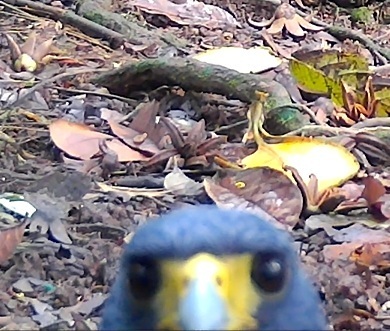
 Barred Hawk
Leucopternis princeps

Semiplumbeous Hawk
Leucopternis semiplumbeus

 American Swallow-tailed Kite
Elanoides forficatus

 Red-tailed Hawk
Buteo jamaicensis

 Broad-winged Hawk
Buteo platypterus

Common Black-Hawk
Buteogallus anthracinus

Short-tailed Hawk
Buteo brachyurus

 Harris' Hawk
Parabuteo unicinctus

Ornate Hawk-Eagle
Spizaetus ornatus

 Roadside Hawk
Rupornis magnirostris

Black-collared Hawk
Busarellus nigricollis

 Snail Kite
Rostrhamus sociabilis
Global Distribution
Warmer areas are where this animal is recorded most often.
Parks Where Found
Quick answers
What are the chances of seeing a White Hawk in Tapantí-Macizo de la Muerte National Park?
Under 5% of wildlife watchers report a White Hawk sighting in Tapantí-Macizo de la Muerte National Park, based on 17 verified sightings from GBIF citizen-science data.
When is the best time to see White Hawk in Tapantí-Macizo de la Muerte National Park?
May has the highest sighting rate for White Hawk in Tapantí-Macizo de la Muerte National Park in our monthly data.