



Blunthead Tree Snake
Imantodes cenchoa
Silhouette: PhyloPic · PhyloPic
- KingdomAnimalia (Animals)
- PhylumChordata (Chordates)
- ClassSquamata
- FamilyColubridae (Colubrid Snakes)
- GenusImantodes (Blunt-headed Tree Snakes)
- SpeciesImantodes cenchoa (Blunthead Tree Snake)
About the Blunthead Tree Snake
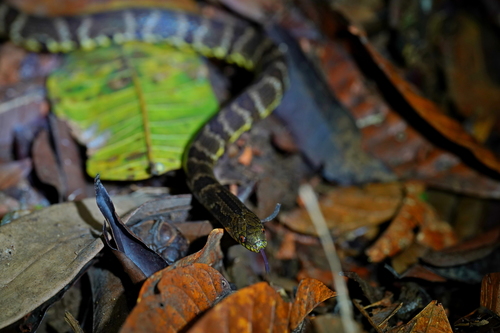
Imantodes cenchoa, also known commonly as the blunthead tree snake, the neotropical blunt-headed tree snake, and the fiddle-string snake, is a species of mildly venomous, rear-fanged snake in the family Colubridae. The species is native to Mexico, Central America, and South America.
The blunthead tree snake averages about 800 mm (31 in) in total length (including tail). Maximum total length is about 1.5 m (4 ft 11 in). I. cenchoa is known for its long, slender body and very large head. The pupil of its eye is very distinct from other snakes. Most snakes found around the world are known to have very poor vision and rely mostly on smell and vibrations to detect signs of prey and predators. Arboreal snakes have much better vision than other snakes. The blunthead tree snake has a vertical slit for a pupil which allows the snake to look downward. This trait gives the blunthead tree snake an advantage over other snakes. The large eyes make up approximately 26% of its head.
The ventral surface, or stomach, of the blunthead tree snake is mostly white, while the dorsal surface, or top, is a light or pale brown with lateral dark brown patches that begin at the head and continue... Wikipedia →
Recent sightings of Blunthead Tree Snake in Yasuní National Park
LIVEiNaturalistClosest Relatives at Yasuní National Park

 Amazon Basin Tree Snake
Imantodes lentiferus

 Diurnal Vine Snake
Xenoxybelis argenteus

Catesby's Snail-eater
Dipsas catesbyi

Mountain Keelback
Helicops angulatus

 Wagler's Sipo
Chironius scurrulus

Tropical Flat Snake
Siphlophis compressus
Big Ground Snake
Atractus major

South American Sipo
Chironius multiventris

Northern Woodland Racer
Drymoluber dichrous

Olive Forest Racer
Dendrophidion dendrophis

Chicken Snake
Spilotes pullatus

Panama Spotted Night Snake
Siphlophis cervinus
Global Distribution
Warmer areas are where this animal is recorded most often.
Parks Where Found
Quick answers
What are the chances of seeing a Blunthead Tree Snake in Yasuní National Park?
About 30% of wildlife watchers report a Blunthead Tree Snake sighting in Yasuní National Park, based on 63 verified sightings from GBIF citizen-science data.
When is the best time to see Blunthead Tree Snake in Yasuní National Park?
March has the highest sighting rate for Blunthead Tree Snake in Yasuní National Park in our monthly data.