
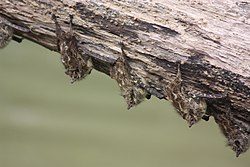



Proboscis Bat
Rhynchonycteris naso
Silhouette: Roberto Díaz Sibaja · PhyloPic
- KingdomAnimalia (Animals)
- PhylumChordata (Chordates)
- ClassMammalia (Mammals)
- OrderChiroptera (Bats)
- FamilyEmballonuridae (Sheath-tailed Bats)
- GenusRhynchonycteris
- SpeciesRhynchonycteris naso (Proboscis Bat)
About the Proboscis Bat
The proboscis bat (Rhynchonycteris naso) is a species of bat found in South America and Central America. Other common names include long-nosed proboscis bat, sharp-nosed bat, Brazilian long-nosed bat, and river bat. It is the only species in the genus Rhynchonycteris.
This species is in the family Emballonuridae, the sac-winged or sheath-tailed bats. Like most bats, it is nocturnal. It is found from southern Mexico to Belize, Peru, Venezuela, Bolivia and Brazil, as well as in Trinidad.
This is a small bat, with a head-and-body length of 37–43 mm (1.5–1.7 in), a tail length of around 12 mm (0.47 in), and a forearm length of 35–41 mm (1.4–1.6 in). A sample of males and females from Trinidad found weights ranging between 2.1–4.3 g (0.074–0.152 oz). Males in northern South America were found to average 56 millimetres (2.2 in) long, females 59 millimetres (2.3 in). The tail is about 16 millimetres (0.63 in) long. Pregnant females can weigh up to 6 grams (0.21 oz).
This species is found in the lowlands of the northern half of South America, throughout Central America, and into southeastern Mexico. From Ecuador south, it is limited to east of the Andes... Wikipedia →
Recent sightings of Proboscis Bat in Bastimentos Island National Marine Park
LIVEiNaturalistClosest Relatives at Bastimentos Island National Marine Park

 Greater Sac-winged Bat
Saccopteryx bilineata

Northern Ghost Bat
Diclidurus albus

 Jamaican Fruit-eating Bat
Artibeus jamaicensis

 Greater Spear-nosed Bat
Phyllostomus hastatus

 orange nectar bat
Lonchophylla robusta

Common tent-making Bat
Uroderma bilobatum

 fringe-lipped bat
Trachops cirrhosus

pale spear-nosed bat
Phyllostomus discolor
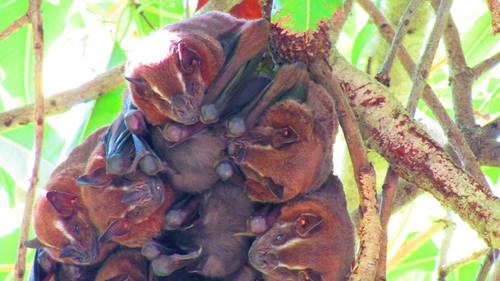
Great Fruit-eating Bat
Artibeus lituratus
Global Distribution
Warmer areas are where this animal is recorded most often.