



Kinkajou
Potos flavus
Silhouette: Margot Michaud · PhyloPic
- KingdomAnimalia (Animals)
- PhylumChordata (Chordates)
- ClassMammalia (Mammals)
- OrderCarnivora (Carnivorans)
- FamilyProcyonidae (Raccoons, Coatis, and Allies)
- GenusPotos (Kinkajous)
- SpeciesPotos flavus (Kinkajou)
About the Kinkajou
The kinkajou (/ˈkɪŋkədʒuː/ KING-kə-joo; Potos flavus) is a mammal of the family Procyonidae, a relative to olingos, coatis, raccoons, and the ringtail and cacomistle. It is the only member of the genus Potos and is also known as the honey bear (a name shared with several unrelated species). Though kinkajous are arboreal, they are not closely related to any other tree-dwelling mammal group (primates, mustelids, etc.).
Native to tropical rainforests of Mexico, Central and South America, this mostly frugivorous mammal is seldom seen by people because of its strict nocturnal habits. However, it is hunted for the pet trade, its skin (to make wallets and horse saddles), and its meat. The species has been included in Appendix III of CITES by Honduras, which means that exports from Honduras require an export permit, and exports from other countries require a certificate of origin or of re-export. They may live up to 40 years in captivity.
The common name kinkajou derives from French quincajou, based on the Algonquian name for the wolverine. It is similar to the Ojibwe word gwiingwaʼaage, perhaps from a Proto-Algonquian *kwi·nkwaʔa·ke. Its other names in English... Wikipedia →
Recent sightings of Kinkajou in Cuyabeno Wildlife Reserve
LIVEiNaturalistClosest Relatives at Cuyabeno Wildlife Reserve

 South American Coati
Nasua nasua

 Crab-eating Raccoon
Procyon cancrivorus

 Giant Otter
Pteronura brasiliensis

 Jaguar
Panthera onca

 Tayra
Tayra
Eira barbara

 Neotropical Otter
Lontra longicaudis

 Mountain Lion
Puma concolor

 Ocelot
Leopardus pardalis
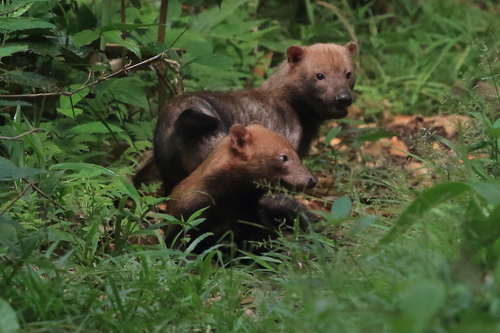
 Bush Dog
Speothos venaticus

Margay
Leopardus wiedii

 Short-eared Dog
Atelocynus microtis
Global Distribution
Warmer areas are where this animal is recorded most often.
Parks Where Found
Quick answers
What are the chances of seeing a Kinkajou in Cuyabeno Wildlife Reserve?
About 10% of wildlife watchers report a Kinkajou sighting in Cuyabeno Wildlife Reserve, based on 20 verified sightings from GBIF citizen-science data.
When is the best time to see Kinkajou in Cuyabeno Wildlife Reserve?
November has the highest sighting rate for Kinkajou in Cuyabeno Wildlife Reserve in our monthly data.