



Tayra
Eira barbara
Silhouette: Margot Michaud · PhyloPic
- KingdomAnimalia (Animals)
- PhylumChordata (Chordates)
- ClassMammalia (Mammals)
- OrderCarnivora (Carnivorans)
- FamilyMustelidae (Mustelids)
- GenusEira (Tayras)
- SpeciesEira barbara (Tayra)
About the Tayra
The tayra (Eira barbara) is an omnivorous animal from the mustelid family, native to the Americas. It is the only species in the genus Eira. Tayras are also known as the tolomuco or perico ligero in Central America, motete in Honduras, irara in Brazil, san hol or viejo de monte in the Yucatan Peninsula, and high-woods dog (or historically chien bois) in Trinidad. The genus name Eira is derived from the indigenous name of the animal in Bolivia and Peru, while barbara means "strange" or "foreign".
Tayras are long, agile mustelids, similar in appearance to a large fisher or marten, but slightly more reminiscent of a sleeker, smaller wolverine. They range from 56 to 71 cm (22 to 28 in) in length, not including their 37- to 46-cm-long (15 to 18 in) bushy tail, and weigh 2.7 to 7.0 kg (6.0 to 15.4 lb). Males are larger and slightly more muscular than females. They have short, dark brown to black fur, which is relatively uniform in length and color across the body, limbs, and tail—except for a yellowish or orange "heart"-shaped spot on the chest. Each tayra's chest patch is unique in color, shape and size, and thus may be used by biologists, rescuers and other specialists... Wikipedia →
Recent sightings of Tayra in Cuyabeno Wildlife Reserve
LIVEiNaturalistClosest Relatives at Cuyabeno Wildlife Reserve

 Giant Otter
Pteronura brasiliensis

 Neotropical Otter
Lontra longicaudis

 Jaguar
Panthera onca

 Kinkajou
Potos flavus

 South American Coati
Nasua nasua

 Mountain Lion
Puma concolor

 Ocelot
Leopardus pardalis
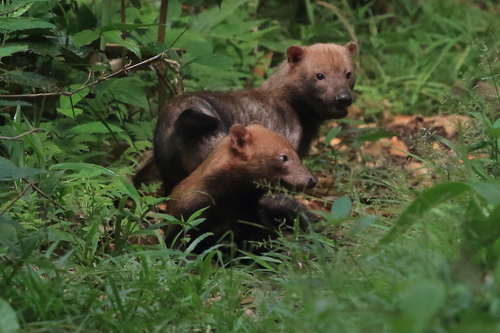
 Bush Dog
Speothos venaticus

 Crab-eating Raccoon
Procyon cancrivorus

Margay
Leopardus wiedii

 Short-eared Dog
Atelocynus microtis
Global Distribution
Warmer areas are where this animal is recorded most often.
Parks Where Found
Quick answers
What are the chances of seeing a Tayra in Cuyabeno Wildlife Reserve?
About 10% of wildlife watchers report a Tayra sighting in Cuyabeno Wildlife Reserve, based on 10 verified sightings from GBIF citizen-science data.
When is the best time to see Tayra in Cuyabeno Wildlife Reserve?
November has the highest sighting rate for Tayra in Cuyabeno Wildlife Reserve in our monthly data.