



African Jacana
Actophilornis africanus
Silhouette: Burton Robert, USFWS · PhyloPic
- KingdomAnimalia (Animals)
- PhylumChordata (Chordates)
- ClassAves (Birds)
- OrderCharadriiformes (Shorebirds and Allies)
- FamilyJacanidae (Jacanas)
- GenusActophilornis (African and Madagascar Jacanas)
- SpeciesActophilornis africanus (African Jacana)
About the African Jacana
The African jacana (Actophilornis africanus) is a wader in the family Jacanidae. It has long toes and long claws that enable it to walk on floating vegetation in shallow lakes, its preferred habitat. It is widely distributed in sub-Saharan Africa. For the origin and pronunciation of the name, see Jacanidae.
The African jacana was formally described in 1789 by the German naturalist Johann Friedrich Gmelin in his revised and expanded edition of Carl Linnaeus's Systema Naturae. He placed it in the genus Parra and coined the binomial name Parra africana. Gmelin based his description on that by the English ornithologist John Latham who in 1785 had described and illustrated the species in his A General Synopsis of Birds. Gmelin and Latham gave the locality as "Africa": this was restricted to Ethiopia in 1915. The African jacana is now placed in the genus Actophilornis that was introduced in 1925 by the American ornithologist Harry C. Oberholser. The genus name combines the Ancient Greek aktē meaning "river bank" or "coastal strand", -philos meaning "-loving" and ornis meaning "bird".
The species is considered to be monotypic: no subspecies are recognised. Wikipedia →
Recent sightings of African Jacana in Etosha National Park
LIVEiNaturalistClosest Relatives at Etosha National Park

 Blacksmith Lapwing
Vanellus armatus

Crowned Lapwing
Vanellus coronatus

 Double-banded Courser
Rhinoptilus africanus

 Black-winged Stilt
Himantopus himantopus

 Wood Sandpiper
Tringa glareola

 Ruff
Ruff
Calidris pugnax

 Little Stint
Calidris minuta

 Spotted Thick-knee
Burhinus capensis

Common Greenshank
Tringa nebularia

 Pied Avocet
Recurvirostra avosetta
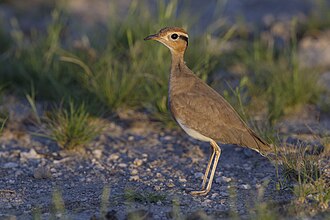
 Burchell's Courser
Cursorius rufus

Temminck's Courser
Cursorius temminckii
Global Distribution
Warmer areas are where this animal is recorded most often.
Parks Where Found
Quick answers
What are the chances of seeing a African Jacana in Etosha National Park?
About 10% of wildlife watchers report a African Jacana sighting in Etosha National Park, based on 109 verified sightings from GBIF citizen-science data.
When is the best time to see African Jacana in Etosha National Park?
June has the highest sighting rate for African Jacana in Etosha National Park in our monthly data.