



Black-winged Stilt
Himantopus himantopus
Silhouette: Edwin Price · PhyloPic
- KingdomAnimalia (Animals)
- PhylumChordata (Chordates)
- ClassAves (Birds)
- OrderCharadriiformes (Shorebirds and Allies)
- FamilyRecurvirostridae (Stilts and Avocets)
- GenusHimantopus (Typical Stilts)
- SpeciesHimantopus himantopus (Black-winged Stilt)
About the Black-winged Stilt
The black-winged stilt (Himantopus himantopus) is a widely distributed, very long-legged wader in the avocet and stilt family Recurvirostridae. Its scientific name, Himantopus himantopus, is sometimes used to generalize a single, almost cosmopolitan species. Alternatively, it is restricted to the form that is widespread in Europe, Asia and Africa, which equals the nominate group of H. himantopus sensu lato. Meanwhile, the black-necked (H. mexicanus) and white-backed stilts (H. melanurus) both inhabit the Americas; the pied stilt (H. leucocephalus) ranges from Australia and New Zealand. Today, most sources accept between one and four actual species.
The black-winged stilt was formally described in 1758 by the Swedish naturalist Carl Linnaeus in the tenth edition of his Systema Naturae. He placed it with the plovers in the genus Charadrius and coined the binomial name Charadrius himantopus. He specified the type locality as southern Europe. The taxonomic name Himantopus comes from Greek, meaning "strap-foot" or "thong-foot". The black-winged stilt is now one of five species placed in the genus Himantopus that was introduced by the French naturalist Mathurin Jacques Brisson... Wikipedia →
Recent sightings of Black-winged Stilt in Etosha National Park
LIVEiNaturalistClosest Relatives at Etosha National Park

 Pied Avocet
Recurvirostra avosetta

 Blacksmith Lapwing
Vanellus armatus

Crowned Lapwing
Vanellus coronatus

 Double-banded Courser
Rhinoptilus africanus

 Wood Sandpiper
Tringa glareola

 Ruff
Ruff
Calidris pugnax

 Little Stint
Calidris minuta

 Spotted Thick-knee
Burhinus capensis

Common Greenshank
Tringa nebularia

 African Jacana
Actophilornis africanus
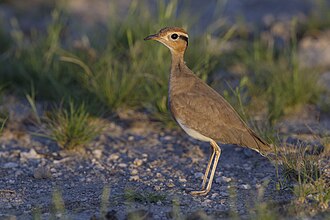
 Burchell's Courser
Cursorius rufus

Temminck's Courser
Cursorius temminckii
Global Distribution
Warmer areas are where this animal is recorded most often.
Parks Where Found
Quick answers
What are the chances of seeing a Black-winged Stilt in Etosha National Park?
About 20% of wildlife watchers report a Black-winged Stilt sighting in Etosha National Park, based on 395 verified sightings from GBIF citizen-science data.
When is the best time to see Black-winged Stilt in Etosha National Park?
April has the highest sighting rate for Black-winged Stilt in Etosha National Park in our monthly data.