


Water Thick-knee
Burhinus vermiculatus
Silhouette: Auckland Museum · PhyloPic
- KingdomAnimalia (Animals)
- PhylumChordata (Chordates)
- ClassAves (Birds)
- OrderCharadriiformes (Shorebirds and Allies)
- FamilyBurhinidae (Stone-curlews and Thick-knees)
- GenusBurhinus (Typical Stone-curlews)
- SpeciesBurhinus vermiculatus (Water Thick-knee)
About the Water Thick-knee
The water thick-knee or water dikkop (Burhinus vermiculatus) is a species of bird in the thick-knee family Burhinidae. The species is found across sub-Saharan Africa, usually close to water. The water thick-knee has a widespread distribution in sub-Saharan Africa, being found in Angola, Botswana, Burkina Faso, Burundi, Cameroon, Central African Republic, Republic of the Congo, Democratic Republic of the Congo, Eswatini, Ivory Coast, Ethiopia, Gabon, Ghana, Kenya, Liberia, Malawi, Mozambique, Namibia, Niger, Nigeria, Rwanda, Senegal, Somalia, South Africa, Tanzania, Uganda, Zambia, and Zimbabwe.
Across its range it is found on the edges of lakes, estuaries and rivers, as well as mangroves and also some sheltered beaches. It also needs bushes or nearby woodlands for shelter. It is found from sea-level to 1,800 m (5,900 ft).
There are two accepted subspecies: Burhinus vermiculatus vermiculatus — Democratic Republic of Congo to Somalia and South Africa Burhinus vermiculatus buettikoferi (Reichenow, 1898) — Liberia to Gabon The water thick-knee is 38 to 41 cm (15–16 in) and weighs 293–320 g (10.3–11.3 oz). It has a heavy... Wikipedia →
Recent sightings of Water Thick-knee in Etosha National Park
LIVEiNaturalistClosest Relatives at Etosha National Park

 Spotted Thick-knee
Burhinus capensis

 Blacksmith Lapwing
Vanellus armatus

Crowned Lapwing
Vanellus coronatus

 Double-banded Courser
Rhinoptilus africanus

 Black-winged Stilt
Himantopus himantopus

 Wood Sandpiper
Tringa glareola

 Ruff
Ruff
Calidris pugnax

 Little Stint
Calidris minuta

Common Greenshank
Tringa nebularia

 African Jacana
Actophilornis africanus

 Pied Avocet
Recurvirostra avosetta
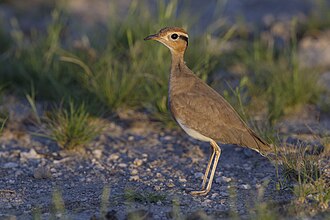
 Burchell's Courser
Cursorius rufus
Global Distribution
Warmer areas are where this animal is recorded most often.
Parks Where Found
Quick answers
What are the chances of seeing a Water Thick-knee in Etosha National Park?
Under 5% of wildlife watchers report a Water Thick-knee sighting in Etosha National Park, based on 15 verified sightings from GBIF citizen-science data.
When is the best time to see Water Thick-knee in Etosha National Park?
August has the highest sighting rate for Water Thick-knee in Etosha National Park in our monthly data.